



Show More

Blog


Blog
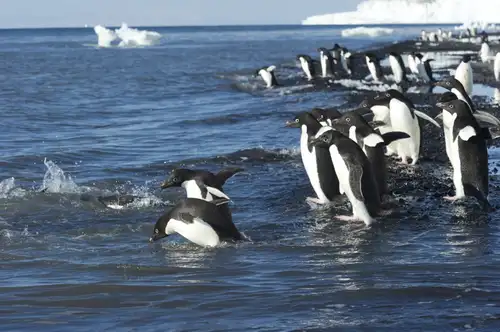
Adélie penguins in the Ross Sea - Antarctica
The Adélie penguin population in the Ross Sea has reached its highest numbers in 30 years, with up to a million breeding pairs during the summer. This accounts for about 38 percent of the entire Antarctic Adélie population.

Blog
Polar Diving: A Supreme Underwater Adventure
Most scuba divers are drawn to warm waters and tropical reefs, and it's easy to see why. However, even the most thrilling experiences can become repetitive if done too often.
Blog
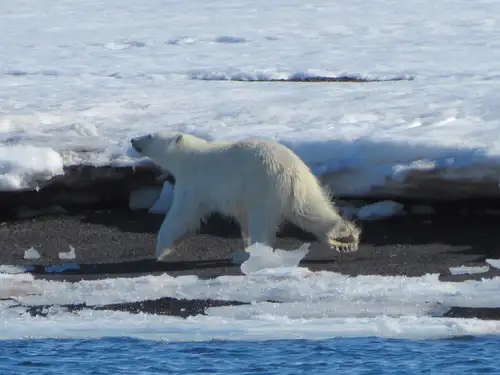
Polar bear feast
The polar bear was relishing his meal; the snow and his face were turning red from the blood. As we observed him eating, our own stomachs began to grumble. It was time for lunch.

Blog
A Diving Dream Fulfilled
Last January, Mark Hatter achieved a dream he’d been training for over two years. Booking his berth aboard the m/v Ortelius and making the long flight to Ushuaia, Argentina, he and two of his friends sailed down the famous Drake Passage, bound for Earth’s southernmost continent. But their Antarctica trip was not just about shoreline walks and photographing penguins.
Blog
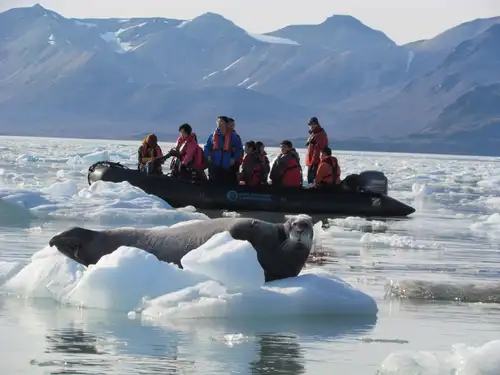
Six Seal Species You Might See On Your Greenland Cruise
If you spot a grand old whiskered man lounging in solitary splendor, there's a good chance you're looking at a bearded seal. Your Greenland cruise will take you to bays where these solitary fellows (except during breeding season) hunt for fish in the relatively shallow waters near the shores.
Blog
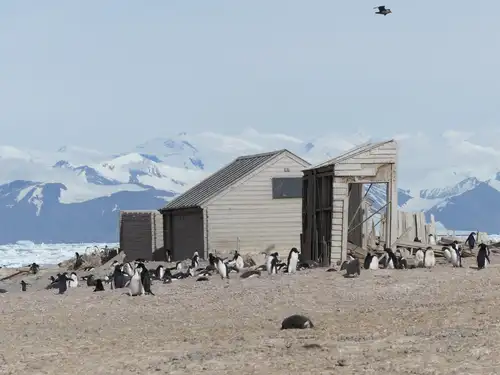
The First Buildings in Antarctica: Borchgrevink’s Historic Huts
Borchgrevink’s huts at Cape Adare hold a significant place in Antarctic history, being the first structures ever built on the continent.

Blog
Seven Sublime Antarctic Bays
Antarctica is renowned for its glaciers, icebergs, and panoramic colonies of penguins. However, less known are the stunning crystal-clear bays that dot the Great White Continent, many of which are explored on our Antarctica cruise routes.
Blog
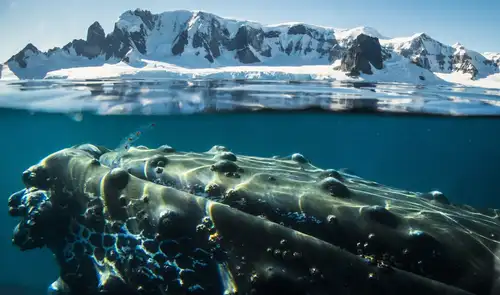
Baleen Whales – The Gentle Giants of the Ocean
They are the largest animals on Earth, yet they thrive on some of the tiniest creatures. These giants can reach lengths of 30 meters (90 feet), but it is the microscopic zooplankton, krill, and small fish that sustain them. These are the baleen whales. Unlike toothed whales, baleen whales lack teeth. Instead, they use plates of baleen in their mouths to trap and consume their tiny prey.
Blog
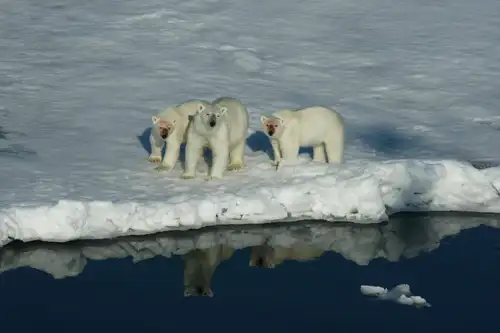
Polar Bear Primer: Eight Facts About the Arctic Wanderer
Polar bears inhabit the Arctic region across 19 subpopulations, including areas in Alaska, Canada, Greenland, Norway, and Russia. These majestic creatures prefer the edges of pack ice where currents and wind interact, creating a dynamic environment of melting and refreezing that forms ice patches and leads, which are open spaces in the sea between sea ice.

Blog
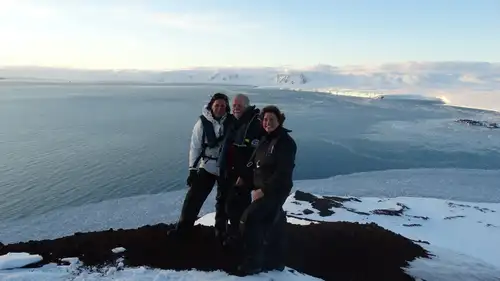
The Enchanting Islands of Svalbard
Svalbard is an Arctic archipelago situated between the North Pole and the Norwegian mainland, offering visitors some of the most stunning wildlife and landscapes in the world. Here we explore seven of the most visited Svalbard islands, highlighting the many wonders that draw people back year after year.
Blog
Polar Cruises: The Ultimate Icebreaker
Travel is one of life’s great eye openers. It brings you into contact with new people and perspectives, challenges old assumptions you haven’t held to the light in years, and invites you to make unexpected discoveries about the world around you – and most of all, yourself. Added to which, you get to visit places you never knew you loved until you saw them.
Blog
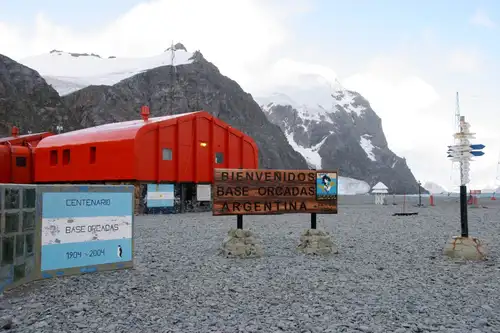
A Look Into the International Research Stations of Antarctica
In 1902, William S. Bruce, along with a team of naturalists, explorers, and sailors, embarked on the first Scottish expedition to Antarctica’s South Pole aboard the Scotia. The Scottish National Antarctic Expedition (SNAE) aimed to establish the continent's first meteorological station and explore its largely undocumented biological, topographic, and meteorological features.

Blog
The Ice-Jewelled Geology of Spitsbergen
The Svalbard archipelago is located in the Arctic Ocean, roughly 660 km (410 miles) north of Norway's northernmost point. This region is a haven for geologists, boasting a rich geological history that spans from the Mesozoic era (65-245 million years ago) through the Cambrian era (570 million years ago) and back to the Archean era, over 3.5 billion years ago.
Blog
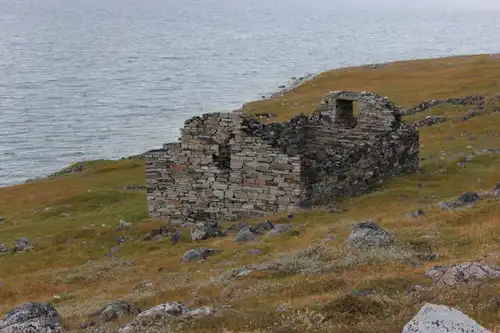
Greenland's History: When Vikings Ruled the Ice Age
A Greenland cruise offers a journey into a rich history filled with intriguing details that captivate polar expedition enthusiasts. Among the most fascinating historical aspects is the fact that Vikings once ruled this land. Anthropologists and climate scientists have long studied Greenland to pinpoint when and why the Vikings left. Recent findings have shed new light on this historical culture.
Blog
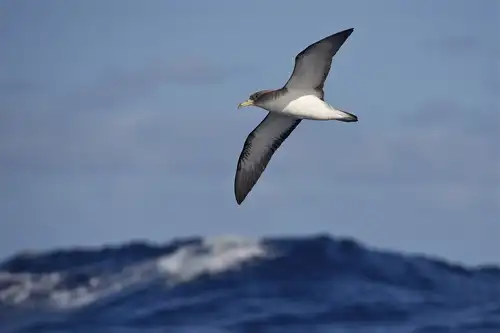
Islands of the Blessed: Things to Do Around Cape Verde
We visit Cape Verde and its capital city of Praia during our occasional St. Helena to Cape Verde voyages. Characterized by peaceful days at sea, these trips allow you to see some of the lesser-known gems of the Atlantic.
Blog
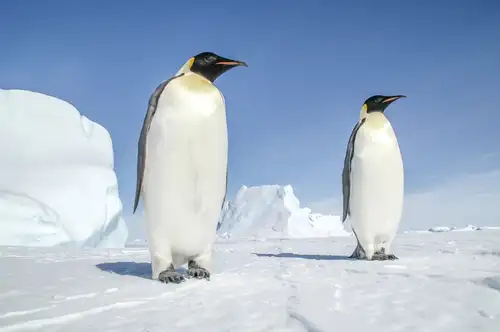
Antarctic Icon: 44 Facts About the Emperor Penguin
What polar bears are for the Arctic, emperor penguins are for Antarctica. These flightless aquatic birds are probably the most recognizable animals in the southern polar regions and certainly among the most popular wildlife attractions for our passengers.
Blog
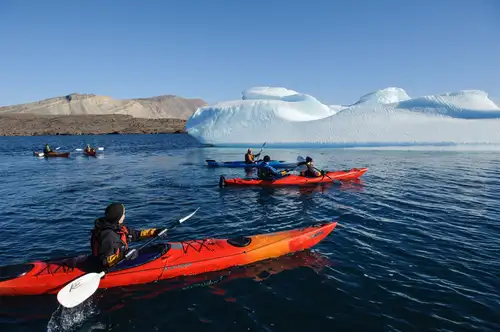
Greenland: Where the Kayak Was Invented
If you've ever enjoyed kayaking, you owe a debt of gratitude to the ancient Greenlandic Inuit who originally designed them for hunting. The thrilling adventures people now have navigating some of the world's most challenging rapids wouldn't be possible without the Inuit's need for a nimble form of water transportation. While travelers still use kayaks in this region, they are typically not fishing, whaling, or sealing. Consequently, recreational kayaks have been adapted to fit their new role.
Blog
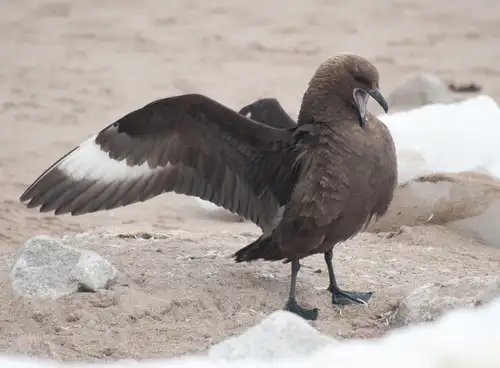
Fierce and Feathered: the Skuas of Antarctica
At first glance, the skuas you encounter in Antarctica may appear to be merely darker-feathered seagulls. But looks can be deceiving.
Blog
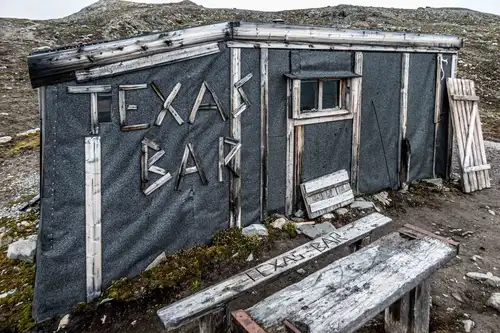
Svalbard’s Texas Bar
Texas Bar is one of the historic areas we visit on certain Svalbard trips, and it always proves to be a cherished landing site among both our guides and guests. This might be surprising, however, given that its name can be a bit misleading.
Blog
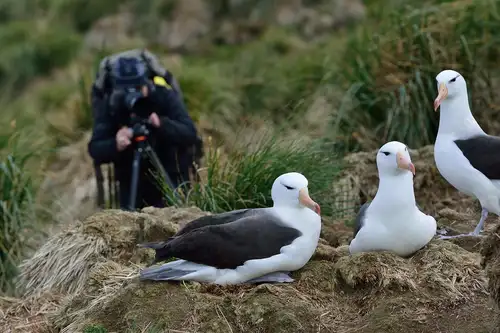
15 Falkland Islands Bird Photos
The remote sub-Antarctic archipelago of the Falkland Islands is a haven for bird enthusiasts, offering a unique and abundant selection of birds, especially seabirds.