



Show More
Blog


Blog
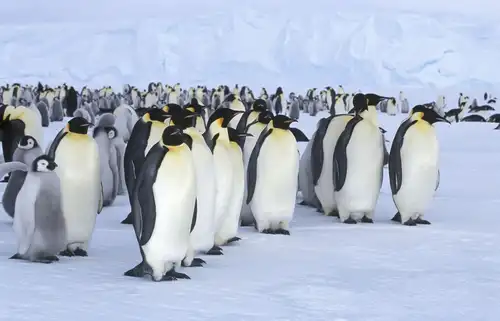
Imperial Antarctica: the Snow Hill Emperor Penguins
Recently, a rare achievement was made by visiting Antarctica’s northernmost emperor penguin colony on Snow Hill Island. Typically surrounded by impassable pack ice, Snow Hill is a notoriously difficult destination in the Weddell Sea cruise itinerary, only accessible using helicopters carried especially for this purpose.
Blog
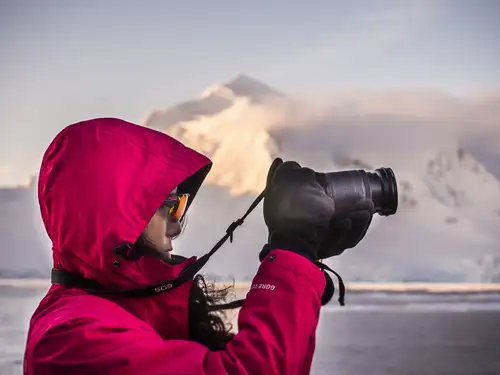
12 photo tips to make better pictures on your Antarctica cruise
During your trip in the Arctic or Antarctic cruise you and your camera equipment will be exposed to a variety of challenging conditions. Be careful with your equipment and protect it from the salty spray when in Zodiacs, on a beach, or on deck. Salt water and electronics is not a good mix!
Blog
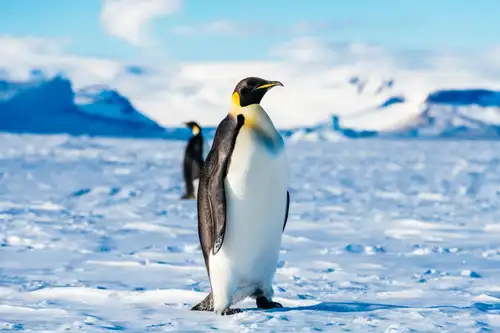
Penguins, Petrels, and Prions: Top Antarctica Bird Tour Spots
If anyone tells you Antarctica is for the birds, they’re right.
Blog
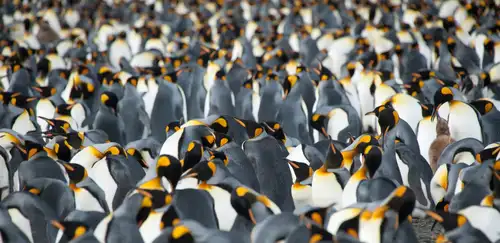
Experience King Penguins, Seals and More in South Georgia
One of the most remarkable aspects of South Georgia Island is its immense population of King penguins. This island serves as a significant breeding ground, and breathtaking aerial photos have captured the sight of hundreds of thousands of King penguins gathered together. This colony is known as the largest crèche in the world, making it one of the top destinations globally for observing King penguins.

Blog
The Ice-Jewelled Geology of Spitsbergen
The Svalbard archipelago is located in the Arctic Ocean, roughly 660 km (410 miles) north of Norway's northernmost point. This region is a haven for geologists, boasting a rich geological history that spans from the Mesozoic era (65-245 million years ago) through the Cambrian era (570 million years ago) and back to the Archean era, over 3.5 billion years ago.
Blog
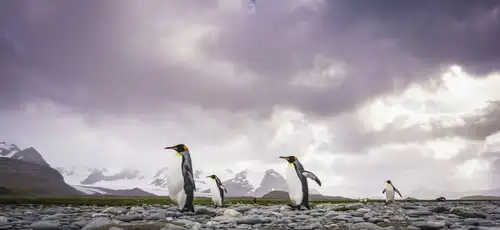
Penguins, Albatrosses, Petrels: The Winged Wildlife of South Georgia
South Georgia’s location south of the Antarctic Convergence gives the island a more Antarctic-like climate compared to other regions at the same latitude. The climate here is marked by cold, cloudy, wet, and windy conditions with highly variable weather.
Blog
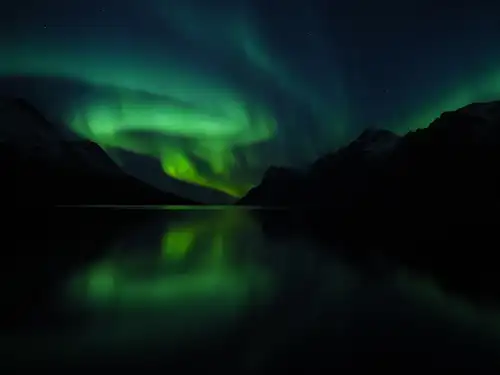
10 Illuminating Facts about the Northern Lights
In Roman mythology, Aurora was the goddess of the dawn. The term "borealis" is derived from the Greek word for "wind." Thus, "aurora borealis" translates to "dawn wind," commonly known as the Northern Lights. This natural phenomenon has captivated humanity for millennia and remains a major attraction in the Arctic, with numerous cruises dedicated to witnessing this mesmerizing light display.
Blog
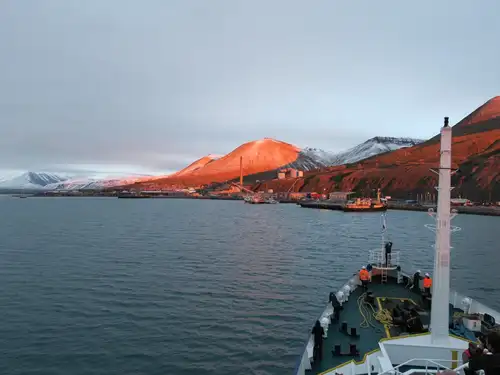
Port Pastimes: 7 Fun Things to Do in Longyearbyen
Waiting in port for an Arctic expedition cruise to begin might seem a little like waiting for water to boil or coffee to brew or a Seinfeld reunion to materialize: Time seems to defy its own laws, life slows to a crawl, and you begin to wonder if it’s really going to be worth it.
Blog
Polar bear encounter in Spitsbergen
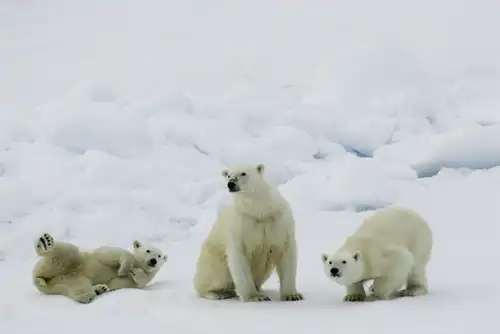
I watch the sea ice from the bridge of a ship in one of the fjords of Spitsbergen, an archipelago north of Norway. I observe a perfectly adapted animal moving on the ice, the results of hundreds of thousands of years of ecological fine-tuning. Snowshoe-sized paws distribute weight, fur handles the cold and sunlight to perfection, and an incredible sense of smell samples this monochromatic realm.
Blog
Polar bear feast
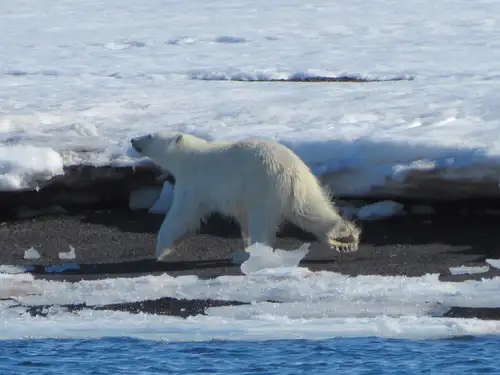
The polar bear was relishing his meal; the snow and his face were turning red from the blood. As we observed him eating, our own stomachs began to grumble. It was time for lunch.
Blog
True South: A New Flag for a Global Antarctica
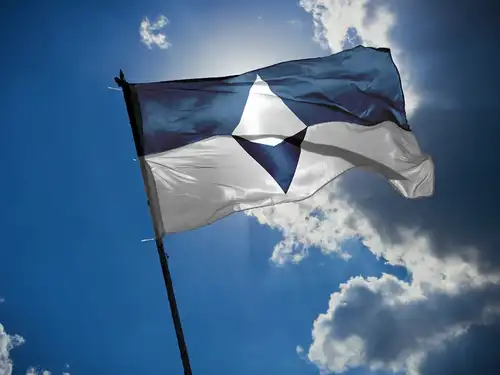
When Evan Townsend signed up to spend the winter of 2018 working at an Antarctic research station, he had no reason to expect he would end the season by designing a new flag for the continent. He had even less reason to expect the support it would receive.
Blog
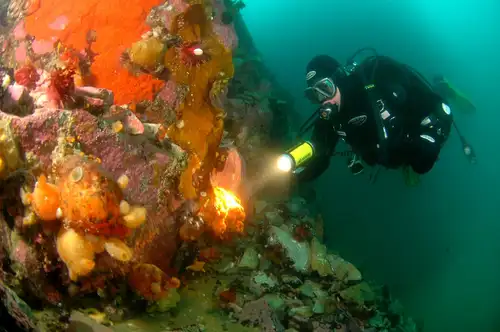
Diving in Antarctica: The Ultimate Underwater Experience
Ice diving offers an extraordinary experience on an Antarctica diving trip. The dive sites are teeming with a unique array of colorful marine life, including penguins and leopard seals, which are exclusive to this region.
Blog
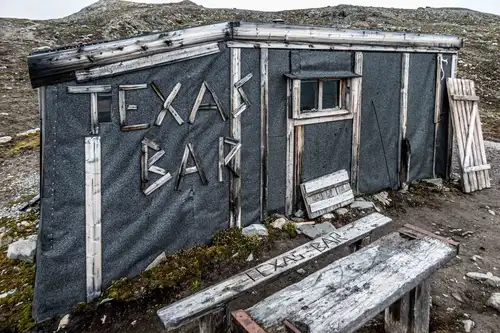
Svalbard’s Texas Bar
Texas Bar is one of the historic areas we visit on certain Svalbard trips, and it always proves to be a cherished landing site among both our guides and guests. This might be surprising, however, given that its name can be a bit misleading.
Blog
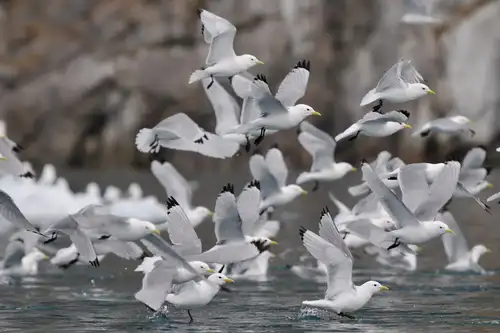
Five Birds You Might See on Your Greenland Cruise
A Greenland expedition cruise offers birdwatchers a unique opportunity to capture stunning avian photographs. With over 230 bird species, Greenland boasts both spectacular landscapes and diverse winged wildlife.
Blog
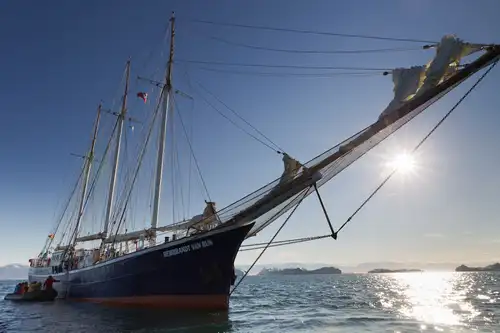
Ancient Arctic Exploration
When it comes to polar exploration, the Arctic boasts a much longer history compared to Antarctica.
Blog
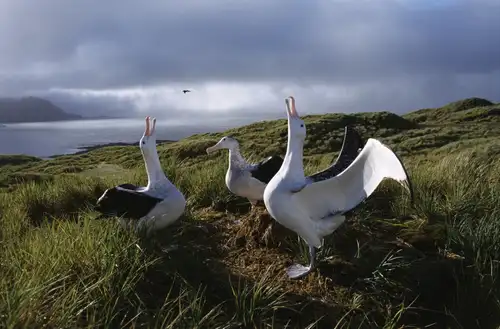
Albatross, penguin and krill research in Antarctica
In the Antarctic region, extensive research is being conducted by national Antarctic programmes from countries like the UK, Australia, and Japan. These studies aim to understand species in the air, on the ground, and in the sea, and how these species are interconnected without variables such as human impacts and climate change.
Blog
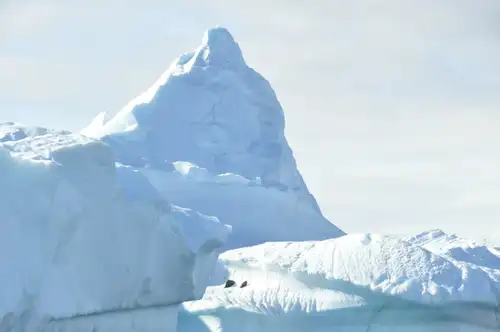
Life migrating through the Polar Front
Since James Cook’s second voyage to Antarctica from 1772-1775, which provided the first descriptions of Antarctic animals, scientists have progressively uncovered the biodiversity of the Antarctic and sub-Antarctic regions. Numerous expeditions and research projects have since been undertaken to understand the unique ecosystems of this continent.
Blog
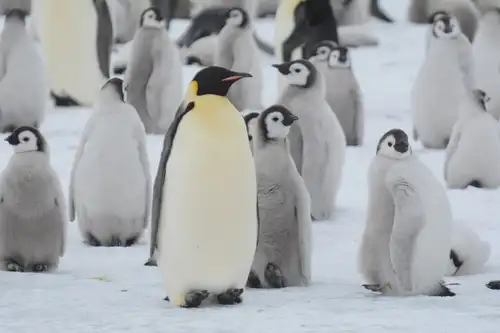
12 Tips to Help Keep Birds Safe During an Antarctic Cruise
One of the most incredible experiences on an Antarctic cruise is observing the numerous penguins in their natural environment. Naturally, passengers often worry about the potential of disturbing the penguins and other Antarctic birds, which could disrupt their breeding and nesting patterns.
Blog
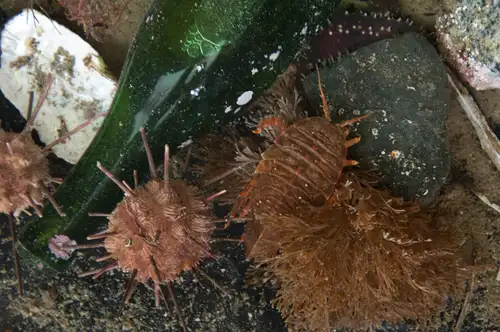
Deep Sea Dwellers: 10 Facts about The Antarctic Giant Isopod
On average, the Giant Antarctic Isopod grows to 9cm (3.5in.) in length. This may not seem very large, but factors including low light levels, freezing cold water, and a lack of oxygen prevent these isopods from growing very large. Other species of isopods, including the Giant Isopod, have been known to grow up to 40 cm (16 inches) in length!
Blog
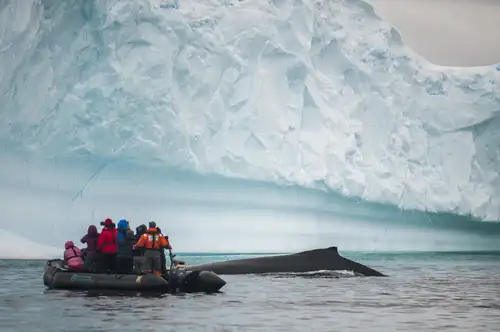
A Day of Whale Watching in Antarctica
This morning we awoke early to enjoy the first light in Wilhelmina Bay, with the snow and cloud blanketing the surrounding mountains. As dawn broke, we could see the blows of humpback whales scattered throughout the bay. Some of the whales were closer to the ship and we spotted their small dorsal fins and occasionally their white patterned tails. It was a terrific start to our first full day in Antarctica.