



Show More

Blog


Blog
Day and night in Antarctica
At the Concordia station, a French-Italian research facility situated 3,233 meters above sea level at Dome C on the Antarctic Plateau, European Space Agency (ESA) scientists are investigating the effects of extended space missions. The station is more isolated than the International Space Station, with the nearest humans located 600 kilometers away.
Blog
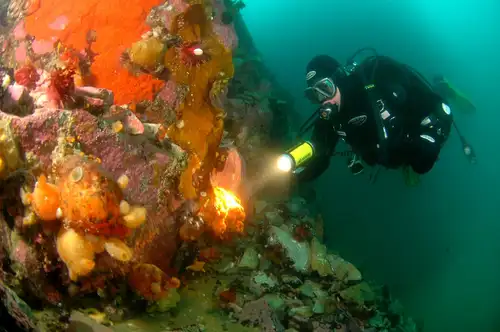
Diving in Antarctica: The Ultimate Underwater Experience
Ice diving offers an extraordinary experience on an Antarctica diving trip. The dive sites are teeming with a unique array of colorful marine life, including penguins and leopard seals, which are exclusive to this region.
Blog
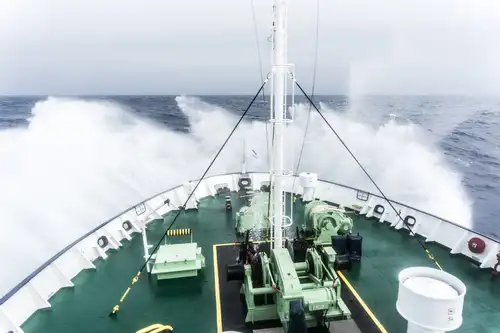
What to Expect When Crossing the Drake Passage
Positioned between the southern tail of South America and the Antarctic Peninsula's north-sweeping arm is a lively little waterway known as the Drake Passage.
Blog
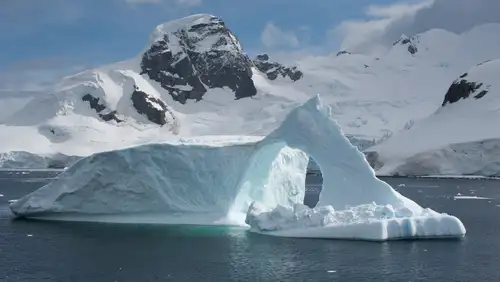
All things ice in the Antarctic
The first documented sighting of an iceberg in Antarctica occurred on February 1, 1700, when Edmond Halley was on an expedition to measure the Earth's magnetic field. He noted in his diary that he encountered "great Islands of Ice, of Soe Incredible a hight and Magnitude that I scare dare to write my thoughts on it."
Blog
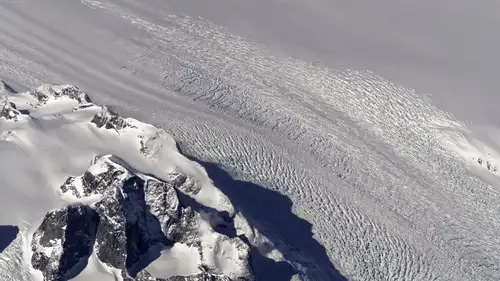
Ice streams and lakes under the Greenland Ice Sheet
The Greenland ice sheet is a dynamic mass of dense, flowing, and deforming ice. Snow deposited on the central parts of the ice sheet is gradually compressed into ice that slowly moves towards the ice margin. At the ice margin, the ice is removed by melting or by breaking off into icebergs.

Blog
Why a Polar Diving Cruise Should be Your Next Great Decision
Not so very long ago, all you had to do to qualify as a thrill-seeker was hop a ship to the polar regions and make it back with all your fingers – or your life, if you weren’t picky.
Blog
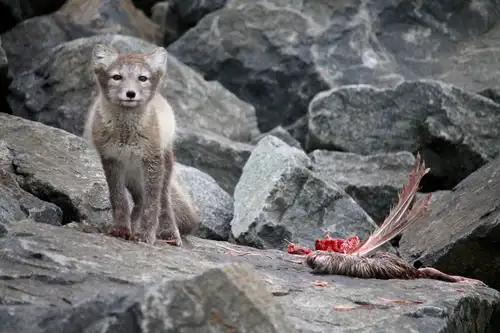
Arctic Foxes: Constant Gardeners of the Arctic
Given how widespread their habitat is, it is little wonder that Arctic foxes are one of the animals we most often see during our Greenland and Svalbard expeditions. The Arctic fox is a circumpolar species whose feeding grounds include North America, Eurasia, even Iceland, ranging from nearly the North Pole all the way down to the sub-Arctic islands.
Blog
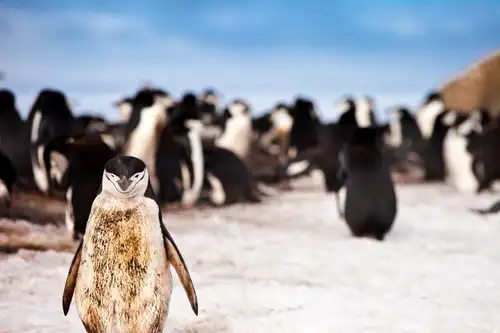
Seven Facts About Antarctic and Sub-Antarctic Penguins
Approximately 50 million years ago, Antarctica was detaching from the vast supercontinent of Gondwana, and penguins were emerging as a distinct species. Initially native to warmer regions, they gradually adapted to the cooling climate of Antarctica as they ventured further south.
Blog
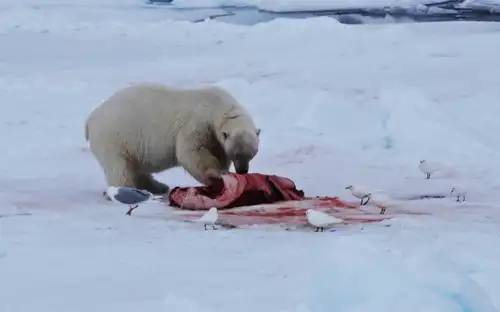
“The polar bear will still be there”
For several hours, we had been navigating the pack ice in search of polar bears. Despite numerous binoculars scanning the ice, no bears were visible, and only a few tracks were found. This suggested we might be in an area with fewer bears. Later that morning, we decided to head a few miles east, suspecting a higher bear population there.

Blog
The Arctic Hare: Easter Bunny
Although the Arctic hare’s stern expression might make it seem like the least amused member of a serious tribunal, this polar animal is actually one of the most charming creatures on the planet – especially when Easter Sunday comes around.
Blog
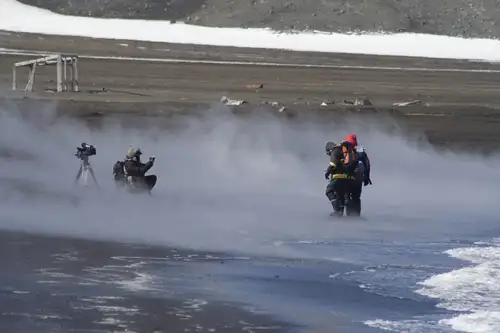
Deception Island deceptively active
In Antarctica, the South Shetland archipelago is home to Deception Island, a volcanic-rounded island that is 15 km in diameter with a shield volcano. The volcano is mainly basalt-andesite and was one of the first parts of Antarctica to be discovered, probably around 1820 by UK and USA sealers.
Blog
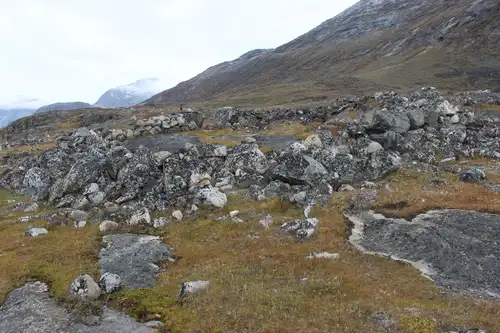
The Norse Settlement of Greenland
Erik the Red is a significant and vibrant figure in the history of the Norse Vikings. His story is primarily documented in the Icelandic Sagas Huaksbók (14th Century) and Skalhóltsbók (15th Century). These accounts offer slightly different versions of events that occurred 3-400 years earlier. The original saga of Erik the Red is believed to have been written around 1200 A.D., with the Skalhóltsbók version considered closest to the original. Additionally, Flateyjarbók (13th Century), which includes the Saga of the Greenlanders, is a crucial source for understanding the settlement of Greenland and the discovery of Vinland – North America.
Blog
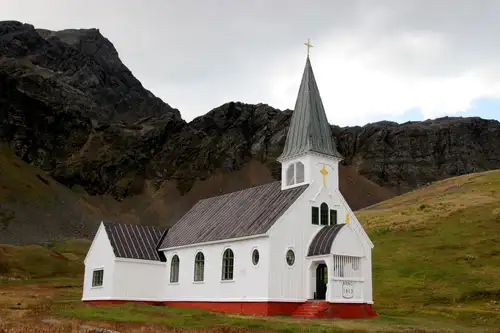
Churches in Antarctica
'Below 40 degrees South there is no law; below 50 degrees South, there is no God', goes the old adage. When faced with a storm in the turbulent and freezing waters of the Drake Passage, one might think so.
Blog
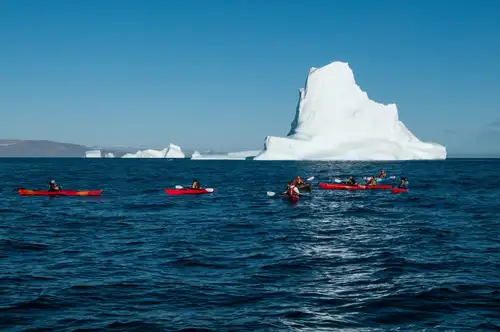
Kayaking In Greenland
Think of Greenland and two images come to mind:

Blog
Book Recommendations for Your Polar Cruise
Though books can't replace the experience of visiting the polar regions, they make excellent companions for your journey. We reached out to our social media followers, many of whom are past or future travelers, to gather their recommendations for polar-related books. The results were impressive, and we've compiled them below in no particular order.

Blog
Traditional Lifestyles of the Inuit
The Inuit are an indigenous Arctic people who speak the languages of the Eskaleutian family and reside in four countries surrounding the North Pole: Greenland, Canada, the United States, and Russia.
Blog
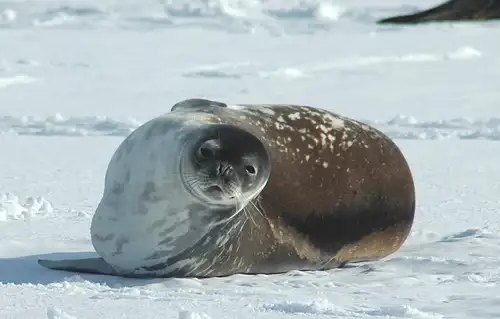
Weddell seals: The data collectors scientists of Antarctica
Weddell seals inhabit some of the coldest and darkest waters deep within the Ross Sea ice, making them the southernmost naturally occurring mammals on Earth. During the winter and summer months, their movements are largely governed by the presence of sea ice and the availability of suitable breathing and exit holes.
Blog
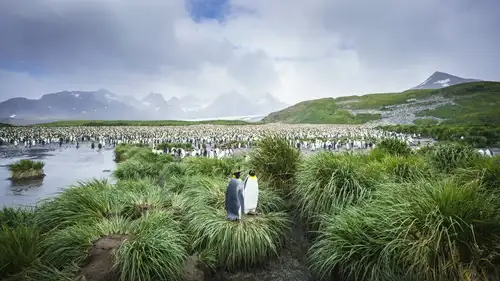
The South Georgia Seven: Hikes, Fjords, Whales, & Penguins
Few places encapsulate such a staggeringly rich assortment of sub-Antarctic scenery, wildlife, and outing opportunities as South Georgia.
Blog
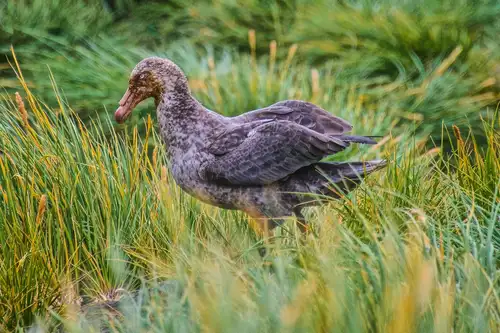
The Giant Petrels of King George Island
Antarctica is undeniably one of the world’s premier birding destinations.
Blog
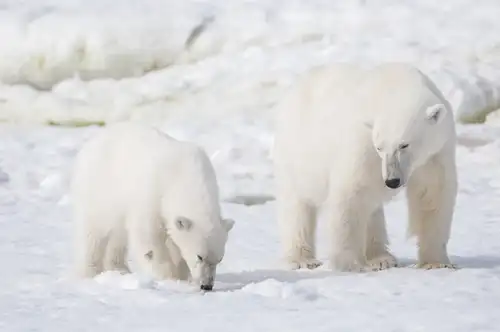
The polar bear: king of the Arctic food chain
As apex predators, polar bears reign supreme in the Arctic food chain. Only humans pose a threat to this massive and majestic species. But one look at these magnificent creatures explains why so many people embark on Arctic trips hoping to spot a polar bear in its natural habitat.