


Show More
Blog


Blog
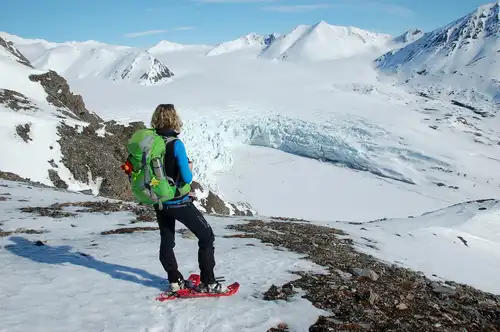
Arctic on Foot: Hiking and Snowshoeing the Far North
The focus of our voyages is always to get you off the ship and into the action as frequently as possible. While we travel from site to site on ice-strengthened vessels, our expeditions are crafted to provide you with the maximum firsthand experience of the polar regions and their unique wildlife.
Blog
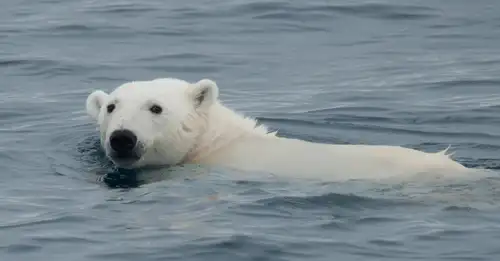
Polar Bear Sets Impressive New Diving Record
According to polar bear experts Rinie van Meurs and Dr. Ian Stirling, the new record for polar bear diving is an astounding three minutes and 10 seconds. Unless this particular polar bear has an unusually large lung capacity, we can now safely assume that these creatures have the ability to remain underwater for an extended period of time.

Blog
Of Treacherous Rocks & Audacious Fin Whales
Soon large blows filled our view; small groups of fin whales sped by heading north all the while feeding on concentrations of krill & small fish. Group after group was seen, with many simply feeding in the general area and not heading anywhere in particular. Soon it became evident that we were not simply seeing a few random groups of fins, but a very large concentration spread out over a large area of sea just north and around the islands north of the South Shetlands. Dozens upon dozens of fin whales were feeding, diving around the ship and on the horizon in massive numbers; we must have seen well over fifty fin whales in the general area of Elephant Island, something many of the guides had never seen before.
Blog
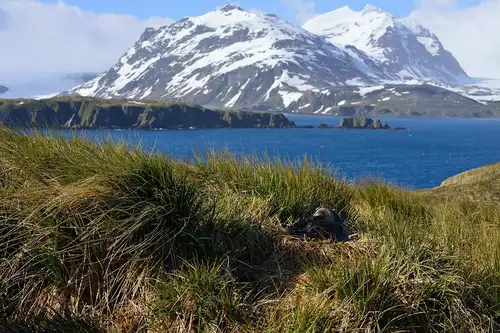
Flowers in Antarctica
The polar regions are among the most inhospitable environments for plants and animals. Life here faces numerous challenges, including low temperatures, high winds, solar radiation, and cell freezing. The Antarctic continent experiences extreme conditions, with darkness during winter and continuous light during summer. Winter temperatures can drop to -60°C or lower.
Blog
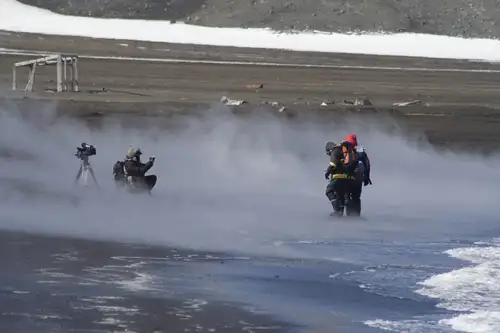
Deception Island deceptively active
In Antarctica, the South Shetland archipelago is home to Deception Island, a volcanic-rounded island that is 15 km in diameter with a shield volcano. The volcano is mainly basalt-andesite and was one of the first parts of Antarctica to be discovered, probably around 1820 by UK and USA sealers.
Blog
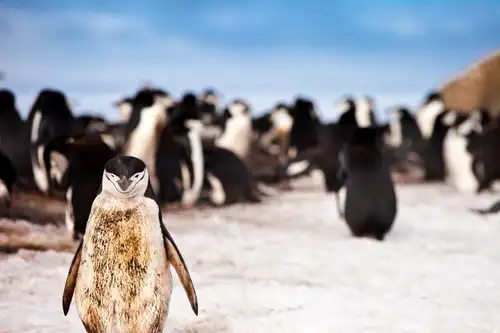
Seven Facts About Antarctic and Sub-Antarctic Penguins
Approximately 50 million years ago, Antarctica was detaching from the vast supercontinent of Gondwana, and penguins were emerging as a distinct species. Initially native to warmer regions, they gradually adapted to the cooling climate of Antarctica as they ventured further south.
Blog
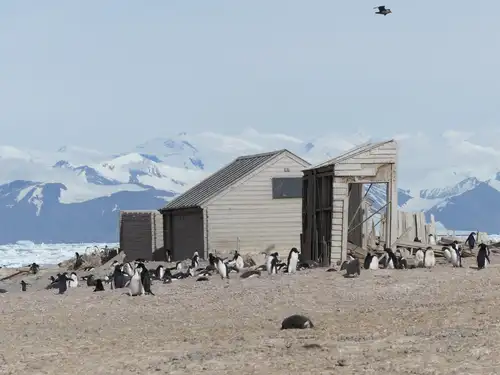
The First Buildings in Antarctica: Borchgrevink’s Historic Huts
Borchgrevink’s huts at Cape Adare hold a significant place in Antarctic history, being the first structures ever built on the continent.
Blog
Everything you need to know about Antarctic icebergs
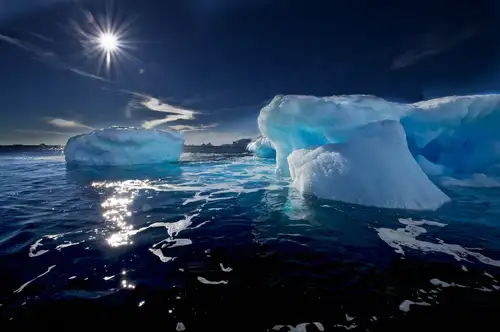
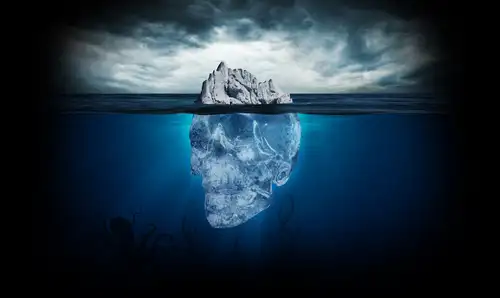
The ice in Antarctica might seem static, but it is constantly moving. Pieces of ice are continuously breaking off from ice shelves, glaciers, or other icebergs. They float freely along with the Antarctic currents, with about 90 percent of their mass below the surface of the water. This fact is actually what gave rise to the nowadays popular phrase “the tip of the iceberg”. Regardless, the sighting of the first iceberg is always a moment to celebrate in any and all Antarctic expeditions. So that you may appropriately ready yourself for that joyous moment, in this article you will find everything you need to know about Antarctic icebergs.
Blog
Seven Frightfully Fun Polar Ghost Stories
The polar regions are unparalleled when it comes to ghost stories.
Blog
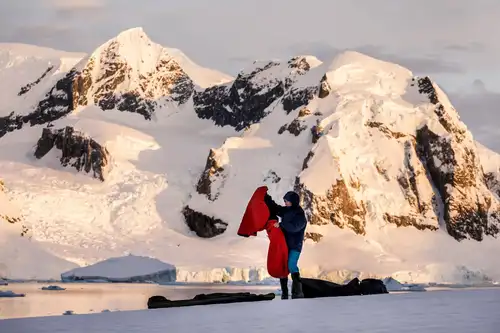
Camping in Antarctica: a True Expedition Experience
We often think of camping as a summer activity, filled with warm nights, campfire dinners, and serene mountain lakes. However, there's a whole other world of camping to explore.

Blog
Book Recommendations for Your Polar Cruise
Though books can't replace the experience of visiting the polar regions, they make excellent companions for your journey. We reached out to our social media followers, many of whom are past or future travelers, to gather their recommendations for polar-related books. The results were impressive, and we've compiled them below in no particular order.
Blog
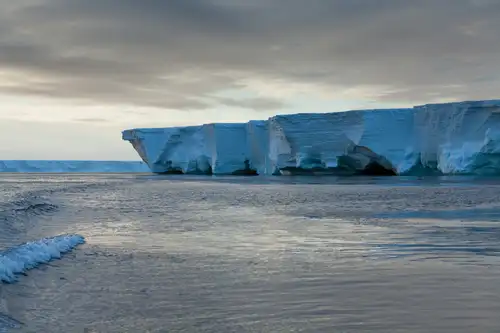
Science of the Ross Ice Shelf
Antarctica’s Ross Ice Shelf is vast, spanning 487,000 sq. km – comparable to the size of France – with a thickness that varies from a few hundred meters near the sea to over 1,200 meters away from the floating edge. The edge along the Ross Sea forms a towering ice wall, rising up to 50 meters above the water, with most of the ice submerged below the waterline.
Blog
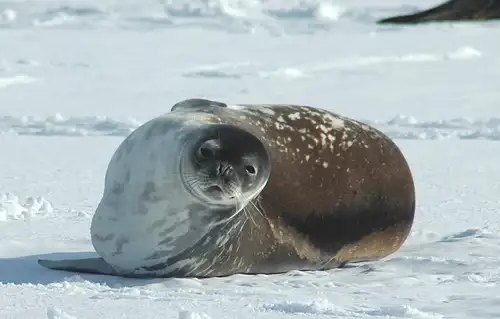
Weddell seals: The data collectors scientists of Antarctica
Weddell seals inhabit some of the coldest and darkest waters deep within the Ross Sea ice, making them the southernmost naturally occurring mammals on Earth. During the winter and summer months, their movements are largely governed by the presence of sea ice and the availability of suitable breathing and exit holes.
Blog
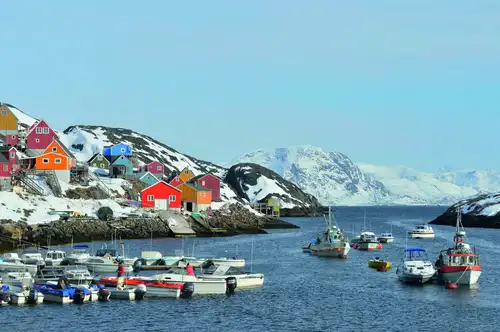
Amazing Greenland
If you ever get the chance to take a trip to Greenland, you will be amazed by its coastlines, fjords, ice-covered peaks, and great expanse of snow-covered land. You will also notice that Greenland is a rugged area with a rich diversity of life, making it a dream location for scientists as well.

Blog
Day and night in Antarctica
At the Concordia station, a French-Italian research facility situated 3,233 meters above sea level at Dome C on the Antarctic Plateau, European Space Agency (ESA) scientists are investigating the effects of extended space missions. The station is more isolated than the International Space Station, with the nearest humans located 600 kilometers away.
Blog
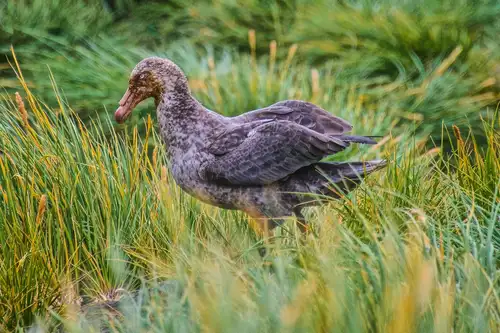
The Giant Petrels of King George Island
Antarctica is undeniably one of the world’s premier birding destinations.
Blog
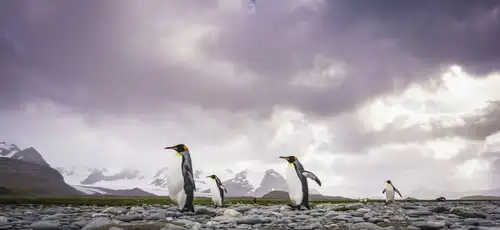
Penguins, Albatrosses, Petrels: The Winged Wildlife of South Georgia
South Georgia’s location south of the Antarctic Convergence gives the island a more Antarctic-like climate compared to other regions at the same latitude. The climate here is marked by cold, cloudy, wet, and windy conditions with highly variable weather.
Blog
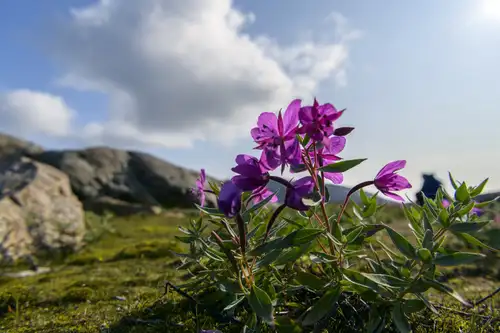
Arctic Flowers, Trees, and Other Plant Life
When many people think of the Arctic, they probably imagine a stark white wasteland devoid of anything except snow, glaciers, and the occasional far-wandering polar bear.

Blog
Exploration of the Polar Regions
From the Vikings via the first whale and seal hunters to Scott and Amundsen, from the maritime explorers Franklin and Nordenskiöld to present-day polar tourism, a quick tour through history reveals some of the aspects which motivated people to extend their horizons. Existential need, sheer curiosity, imperial greed, polar science, and a taste for adventure all converged in regions which pardon no mistakes.
Blog
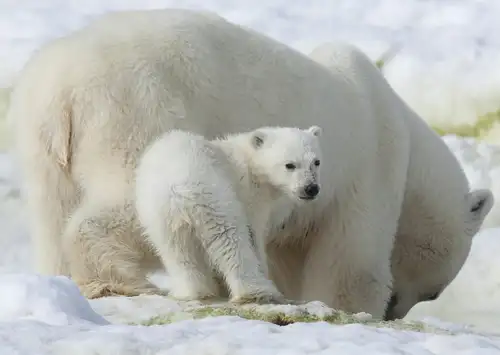
Arctic Icon: 10 Facts about the Polar Bear
Polar bears are to the Arctic what penguins are to Antarctica.