


Show More
Blog


Blog
Polar bear encounter in Spitsbergen
I watch the sea ice from the bridge of a ship in one of the fjords of Spitsbergen, an archipelago north of Norway. I observe a perfectly adapted animal moving on the ice, the results of hundreds of thousands of years of ecological fine-tuning. Snowshoe-sized paws distribute weight, fur handles the cold and sunlight to perfection, and an incredible sense of smell samples this monochromatic realm.
Blog
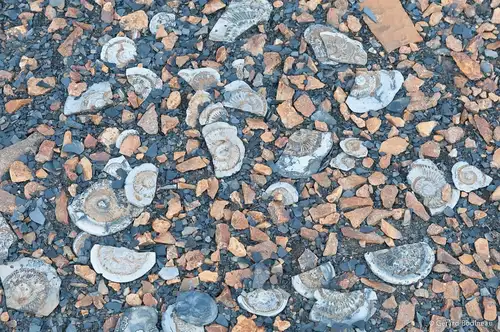
Svalbard a Disneyland for geologists
Svalbard is situated in the north-western corner of the Eurasian plate. Historically, Svalbard was part of a vast continent that included North America, Greenland, and Eurasia. At one point, both Northeast Greenland and Svalbard were submerged under the ocean before resurfacing.
Blog
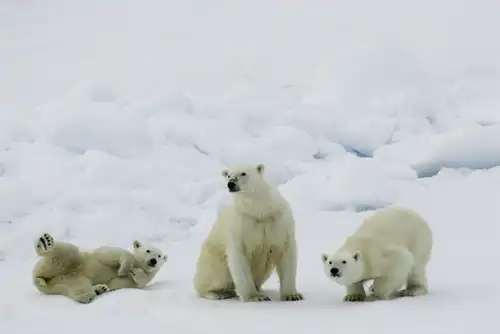
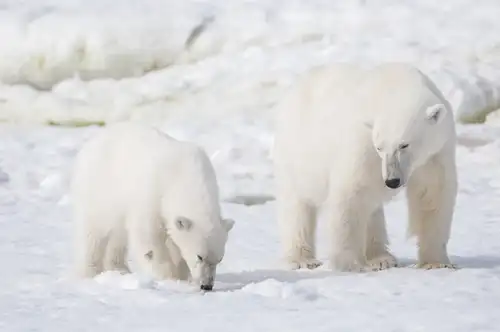
The polar bear: king of the Arctic food chain
As apex predators, polar bears reign supreme in the Arctic food chain. Only humans pose a threat to this massive and majestic species. But one look at these magnificent creatures explains why so many people embark on Arctic trips hoping to spot a polar bear in its natural habitat.

Blog
Seven Sublime Antarctic Bays
Antarctica is renowned for its glaciers, icebergs, and panoramic colonies of penguins. However, less known are the stunning crystal-clear bays that dot the Great White Continent, many of which are explored on our Antarctica cruise routes.
Blog
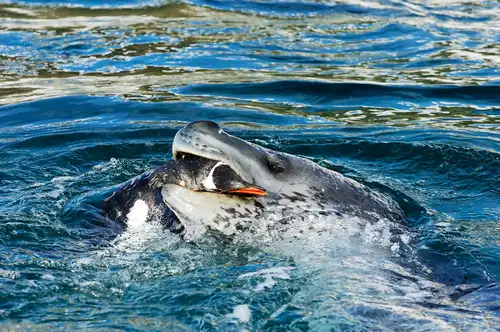
Danger Beneath the Water: 10 Facts About Leopard Seals
If your thirst for adventure leads you to Antarctica, you may be lucky enough to cross paths with a leopard seal while you’re there. These amazing animals are wonderful to observe both in and out of the water, and they are a coveted part of the polar wildlife experience.

Blog
Around Spitsbergen vs. North Spitsbergen
Svalbard, particularly Spitsbergen, was the first polar expedition cruise destination. It's no surprise that there are numerous trip programs available in this region. Among the most unique are the Around Spitsbergen and North Spitsbergen cruises.
Blog
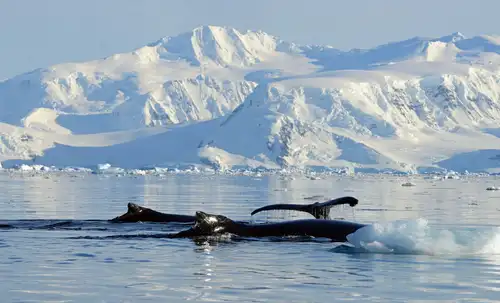
Humpback Whales: the Stars of the Western Antarctic Peninsula
The marine ecosystem of the West Antarctic Peninsula (WAP) stretches from the Bellingshausen Sea to the northern tip of the peninsula. This region includes the Antarctic Sea Ice Zone, a highly productive area that supports large populations of marine mammals, birds, and Antarctic krill. One of the highlights of this region, which you can observe on a whale-spotting Antarctica cruise, is the humpback whale.

Blog
Two for the Snow: Polar Cruises for Couples
Do you know the old saying, “Cold hands, warm heart”? In our opinion, that bodes well for couples who visit the polar regions.
Blog
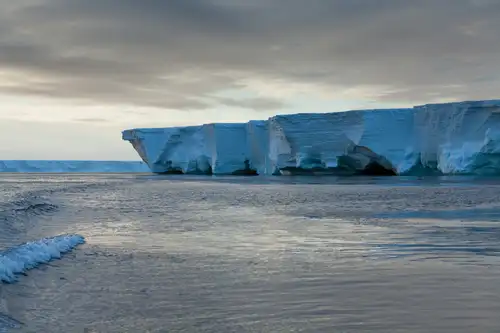
Science of the Ross Ice Shelf
Antarctica’s Ross Ice Shelf is vast, spanning 487,000 sq. km – comparable to the size of France – with a thickness that varies from a few hundred meters near the sea to over 1,200 meters away from the floating edge. The edge along the Ross Sea forms a towering ice wall, rising up to 50 meters above the water, with most of the ice submerged below the waterline.
Blog
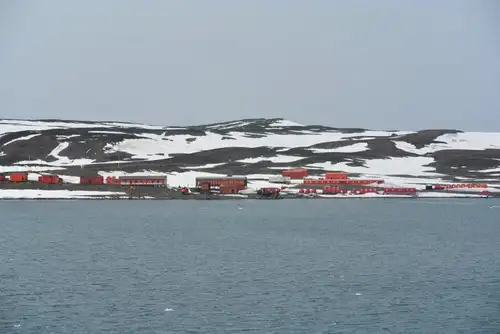
Living the Antarctic Dream
From October to March, during the Austral summer, thousands of breeding gentoo, Adèlie, and chinstrap penguins flock to the Western Antarctic Peninsula to rear their chicks and feast on krill before the harsh winter arrives. Alongside the penguins, field biologists from around the world gather to study these habits for conservation research. Observing these animals is one thing, but residing in an Antarctic field station for an entire breeding season is another. One particular field camp on King George Island, managed by American scientists, has perfected this Antarctic lifestyle and has thrived for over 30 years.
Blog
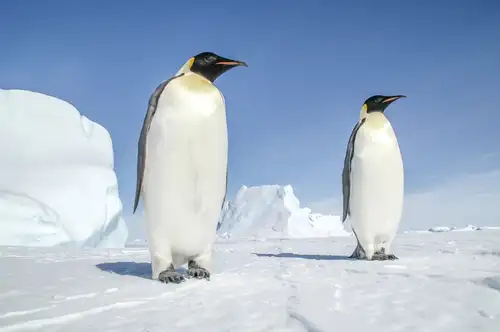
Antarctic Icon: 44 Facts About the Emperor Penguin
What polar bears are for the Arctic, emperor penguins are for Antarctica. These flightless aquatic birds are probably the most recognizable animals in the southern polar regions and certainly among the most popular wildlife attractions for our passengers.

Blog
Five of History’s Greatest Polar Explorers
Today's visitors to the polar regions follow in the footsteps of some of the most famous explorers in history. Here is a list of five great explorers who braved the harsh lands of the Arctic and Antarctica.
Blog
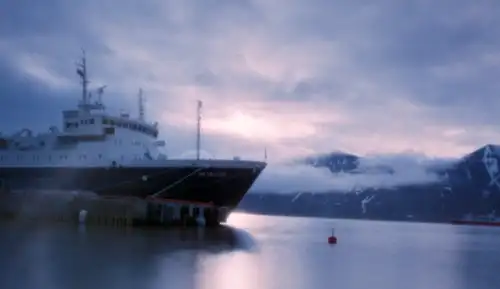
Solargraphy & Pin Hole photography in the Arctic
Blog
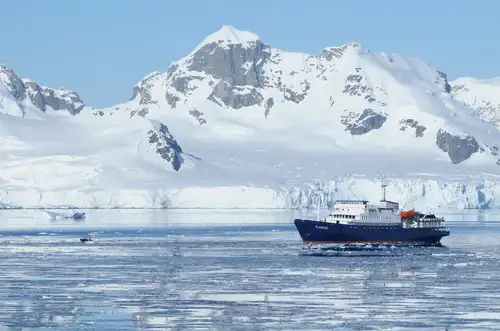
The Ultimate Traveler’s Guide to the Arctic and Antarctica
Sunrises or sunsets? Coffee or tea? Polar bears or penguins?
Blog
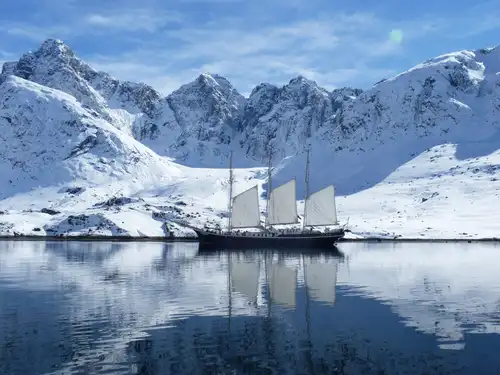
Why You Should Visit Greenland: 11 Things to See, Do, and Explore
There's nothing quite like witnessing your first Greenland glacier, navigating into the island's largest fjord system (which also happens to be Earth's largest), or observing a humpback whale breach over the dark Greenland Sea.
Blog
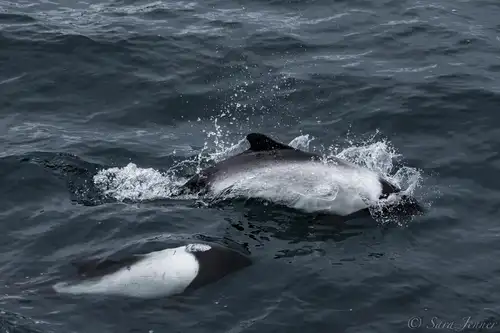
The Small but Social Commerson’s Dolphin
Despite being one of the lesser-known Antarctic cetaceans, Commerson's dolphins are quite social and have been given various names over the years, including Piebald dolphins, skunk dolphins, and panda dolphins. These names have been in use since their discovery in 1767 by French naturalist Philibert Commerson.
Blog
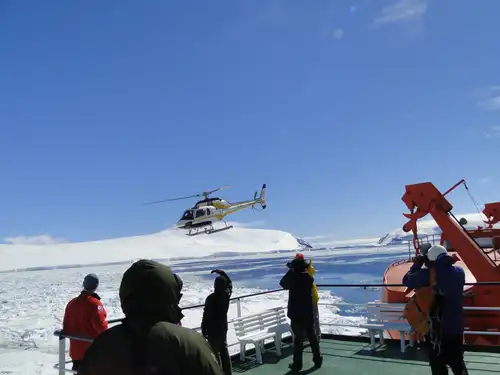
The Wonderful Weddell Sea: Places, Pics, and Impressions
When we talk about Antarctica, it’s easy to slip into familiar words: amazing, astounding, extraordinary, exceptional. And though most Antarctic locations more than deserve these descriptions, some deserve them more than others.
Blog
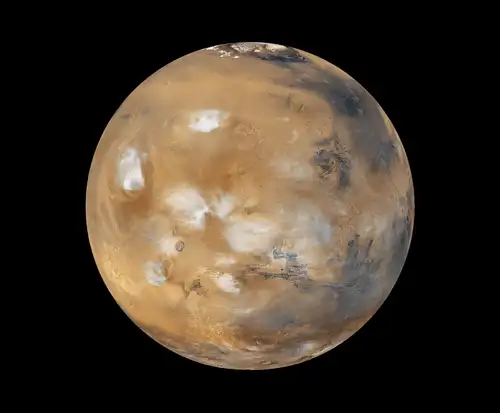
Earth vs. Mars: Polar Regions Compared
It’s well-known that Mars, like Earth, has its own polar regions, often referred to as the Martian ice caps. These regions, similar to Earth's, are situated at the north and south poles and experience much lower temperatures compared to the areas in-between.

Blog
Polar Diving: A Supreme Underwater Adventure
Most scuba divers are drawn to warm waters and tropical reefs, and it's easy to see why. However, even the most thrilling experiences can become repetitive if done too often.
Blog
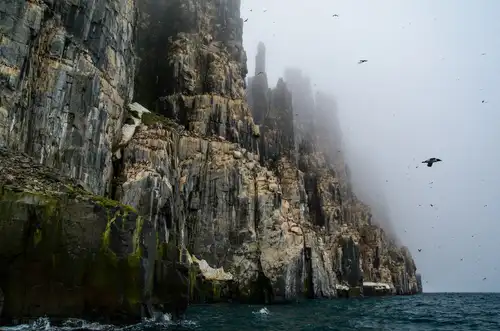
Spitsbergen: Alkefjellet magic
If they knew their way home, why not follow them? Equipped with GPS and compass, we approached the cliffs by zodiac. First, we heard the noise from the colony – the distinct calls of guillemots, kittiwakes, and Glaucous gulls. Then the cliffs gradually emerged from the mist.