


Show More
Blog


Blog
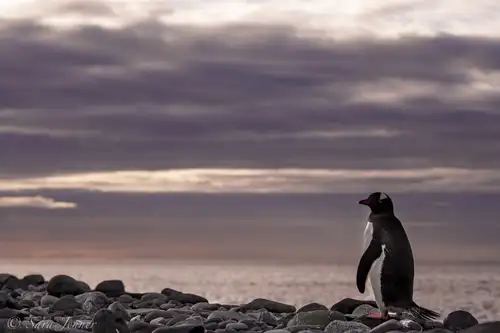
Penguin Wisdom: Life Lessons from Our Favorite Flightless Birds
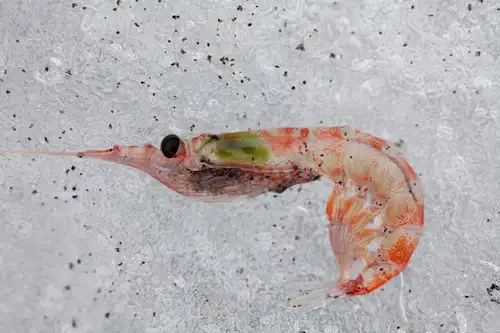
As enthusiasts of wildlife travel, we believe every creature has something valuable to impart - from the grand blue whale to the tiny cephalopod, the formidable polar bear to the elusive Arctic fox.
Blog
Life in the Polar Regions
Polar bears in the Arctic, penguins in Antarctica.
Blog
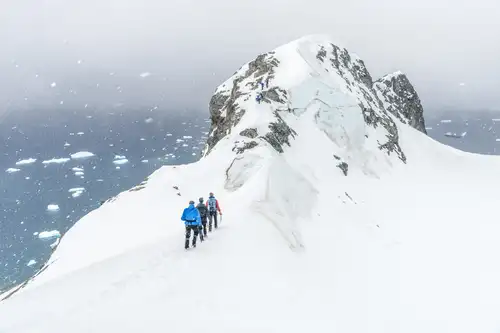
The Ins, Outs, and Ups of Polar Mountaineering & Ski Mountaineering
Traveling to the polar regions, whether to the Arctic or Antarctica, is an adventure almost no matter what you do.
Blog
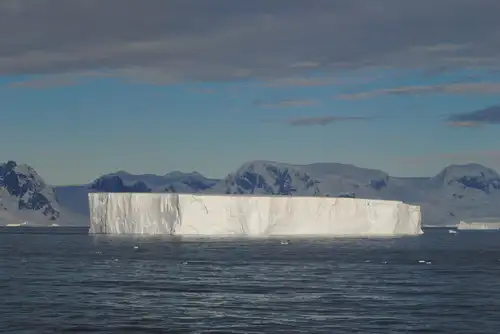
What the ice reveals about Antarctica
The continent you'll explore during your Antarctica cruise is far more than just an ice-covered land with penguins, whales, and seals. Beneath the thick ice lie hidden freshwater lakes teeming with thousands of microbes, hinting at a diverse array of life. In 2013, a team of researchers obtained the first uncontaminated water sample ever retrieved directly from an Antarctic lake.
Blog
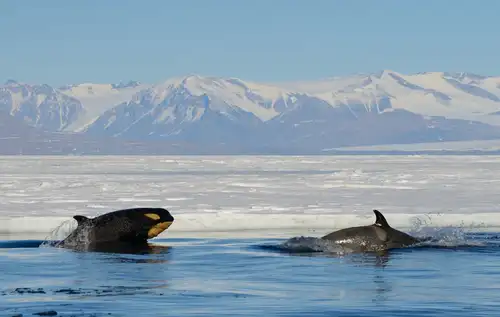
Orcas (aka Killer Whales) of Antarctica and the sub-Antarctic
Orcas are highly social and intelligent members of the dolphin family Delphinidae. They are sometimes referred to as killer whales, though this name has somewhat fallen out of fashion due to inaccurately characterizing orcas as ferocious predators.
Blog
The Mysteries of the Beluga Whale
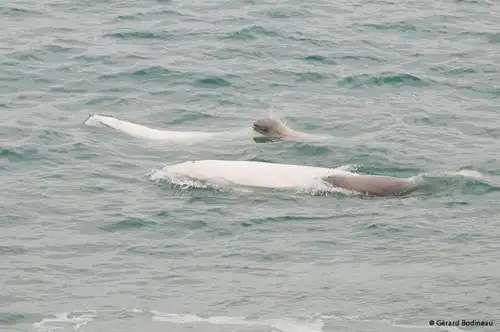
Beluga whales, also known as white whales, sea canaries, and sometimes melonheads, are a rare but cherished sight during Arctic cruises, thanks to their striking appearance. Despite the rarity of beluga sightings, a good amount is known about these friendly-faced cetaceans.
Blog
A Look Into the International Research Stations of Antarctica
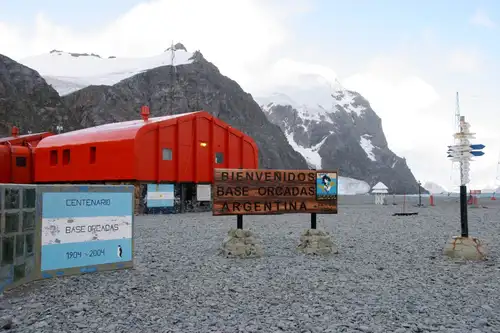
In 1902, William S. Bruce, along with a team of naturalists, explorers, and sailors, embarked on the first Scottish expedition to Antarctica’s South Pole aboard the Scotia. The Scottish National Antarctic Expedition (SNAE) aimed to establish the continent's first meteorological station and explore its largely undocumented biological, topographic, and meteorological features.

Blog
Of Treacherous Rocks & Audacious Fin Whales
Soon large blows filled our view; small groups of fin whales sped by heading north all the while feeding on concentrations of krill & small fish. Group after group was seen, with many simply feeding in the general area and not heading anywhere in particular. Soon it became evident that we were not simply seeing a few random groups of fins, but a very large concentration spread out over a large area of sea just north and around the islands north of the South Shetlands. Dozens upon dozens of fin whales were feeding, diving around the ship and on the horizon in massive numbers; we must have seen well over fifty fin whales in the general area of Elephant Island, something many of the guides had never seen before.
Blog
Harp seals harping on in Greenland
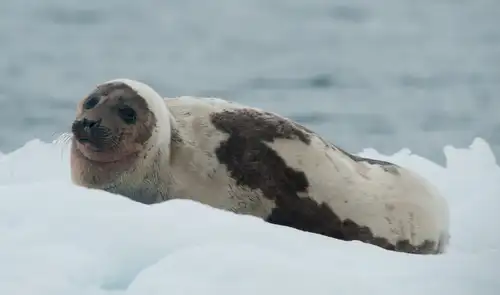
Harp seals are a moderately sized species, typically reaching about 1.6 meters in length and weighing around 130 kilograms. Both males and females are similar in size and weight, with males being only slightly larger. They possess a thick, robust body, a small broad and flat head, short narrow flippers, and a narrow muzzle.
Blog
Birds of the North: 29 Arctic Birds and Seabirds
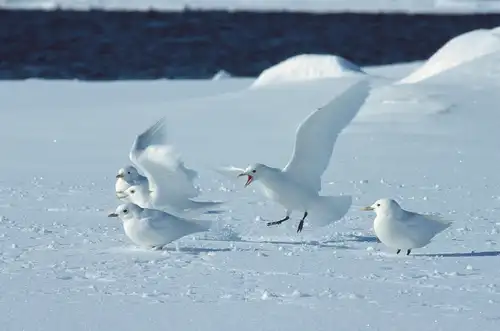
The Arctic is home to some of the world’s most majestic mammals, both on land and sea. However, the bird life in this region is equally remarkable, showcasing numerous exotic species that are highly prized by bird enthusiasts worldwide.
Blog
10 Traits of Post-Ice-Age Greenland
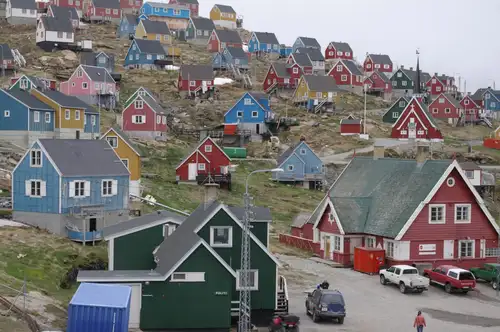
Grasses, sedges, and other species of heath were the first arrivals, and are still commonly found in Greenland. Scientists have been able to work out how plants colonised Greenland by examining ancient pollen samples found in deposits at the bottom of lakes: Dwarf birch came to western Greenland around 9,000 years ago, and around 4,500 years ago – roughly the same time humans were first boating onto Greenland shores – green alders were taking up residence there.

Blog
The Ice-Jewelled Geology of Spitsbergen
The Svalbard archipelago is located in the Arctic Ocean, roughly 660 km (410 miles) north of Norway's northernmost point. This region is a haven for geologists, boasting a rich geological history that spans from the Mesozoic era (65-245 million years ago) through the Cambrian era (570 million years ago) and back to the Archean era, over 3.5 billion years ago.
Blog
Deep Sea Dwellers: 10 Facts about The Antarctic Giant Isopod
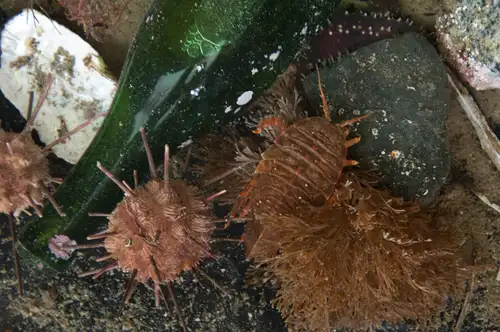
On average, the Giant Antarctic Isopod grows to 9cm (3.5in.) in length. This may not seem very large, but factors including low light levels, freezing cold water, and a lack of oxygen prevent these isopods from growing very large. Other species of isopods, including the Giant Isopod, have been known to grow up to 40 cm (16 inches) in length!
Blog
Antarctica’s first Marine Protected Area
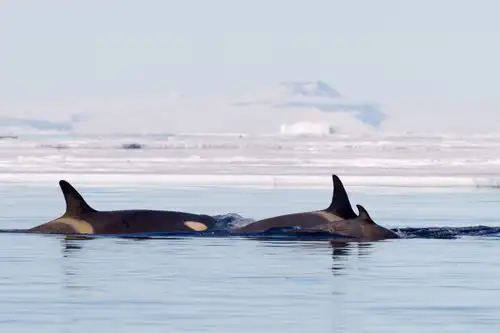
In October of this year, the Commission for the Conservation of Antarctic Marine Living Resources, which includes 24 countries such as the United States, the European Union, Australia, and New Zealand, reached a consensus on a New Zealand/United States proposal to establish a large-scale Marine Protected Area (MPA) in the Ross Sea region.
Blog
The First Buildings in Antarctica: Borchgrevink’s Historic Huts
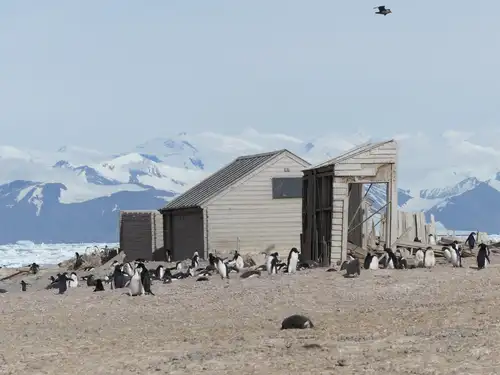
Borchgrevink’s huts at Cape Adare hold a significant place in Antarctic history, being the first structures ever built on the continent.
Blog
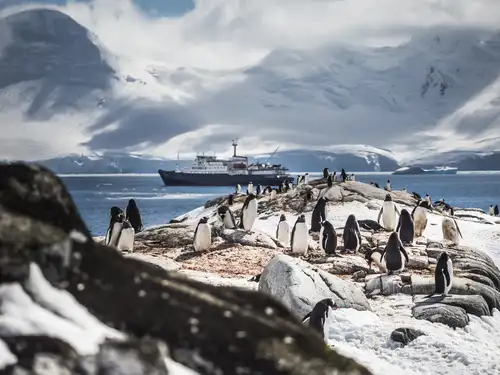
Top 10 Antarctic Attractions
There’s a reason people go to such lengths to visit Antarctica, and its abundance of whales, seals, penguins, and seabirds are only part of the polar story.
Blog
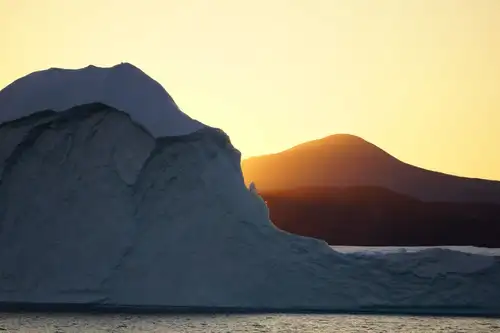
Light in the Land of the Midnight Sun
The midnight sun, also referred to as the polar day, is a fascinating natural event observed within the Arctic and Antarctic circles. During the polar summer, the sun remains above the horizon for 24 hours a day, resulting in continuous daylight without any sunrise or sunset. This phenomenon occurs due to the Earth's seasonal tilt towards the sun during the summer months in these regions.
Blog
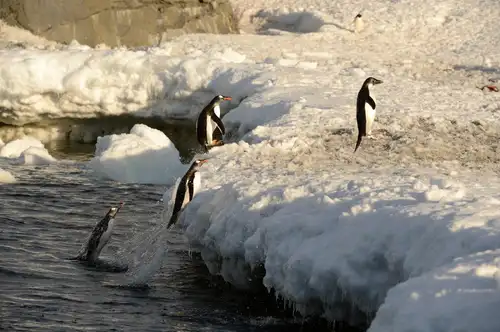
10 Terrific Antarctic Bird Facts
Antarctica is a premier destination for birdwatching, boasting around 45 unique species. Describing them all would require an extensive article, so here we will focus on 10 fascinating facts about the birds you can encounter in Antarctica.
Blog
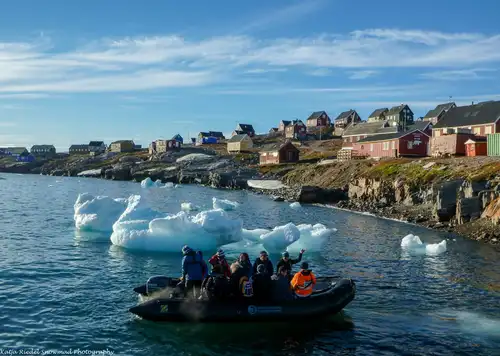
Scoresby Sund: the Greatest Greenland Adventure
In a land of expansive mountains, colossal glaciers, and majestic shorelines, few places are as expansive, colossal, or majestic as Scoresby Sund.
Blog
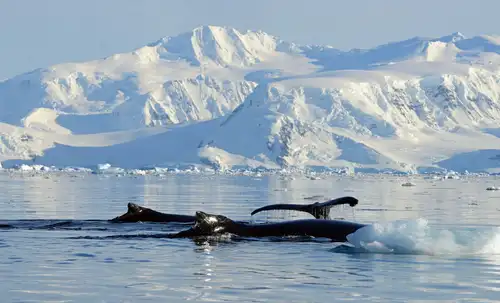
Humpback Whales: the Stars of the Western Antarctic Peninsula
The marine ecosystem of the West Antarctic Peninsula (WAP) stretches from the Bellingshausen Sea to the northern tip of the peninsula. This region includes the Antarctic Sea Ice Zone, a highly productive area that supports large populations of marine mammals, birds, and Antarctic krill. One of the highlights of this region, which you can observe on a whale-spotting Antarctica cruise, is the humpback whale.