


Show More
Blog


Blog
12 Things to Do in Antarctica
Traveling to Antarctica is unlike traveling to any other place on Earth.

Blog
The World Is Changing for Greenland's Native Inuit People
You may know them as Eskimos, but the people of the Arctic are officially called the Inuit. Historically, they were hunters in the truest sense. For hundreds of years, they survived the world’s harshest conditions, living off their prey of whales, seals, polar bears, musk oxen, birds, fish, and reindeer. This has always been their way of life.
Blog
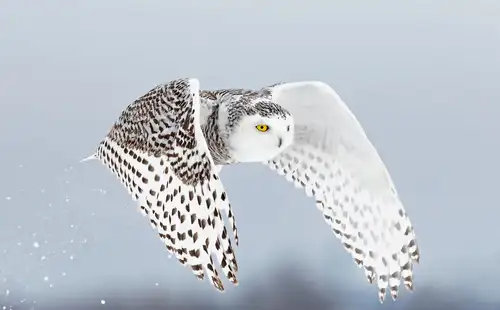
Secrets of the Snowy Owl: Habitat, Adaptations, and Other Facts
The snowy owl (Bubo scandiacus), also known as the great white owl or Arctic owl, is one of the most distinctive bird species on the planet. While you won’t find them in all areas of the Arctic – they don’t exist in Svalbard due to the lack of lemmings – snowy owls are seen in the polar regions of Eurasia and North America and are a potential visitor during Greenland cruises. The binomial species name, “scandiacus,” is derived from Scandinavia, as this is where the bird was first discovered. The snowy owl is the official bird of Quebec, and they are a must-see for countless bird watchers and naturalists.
Blog
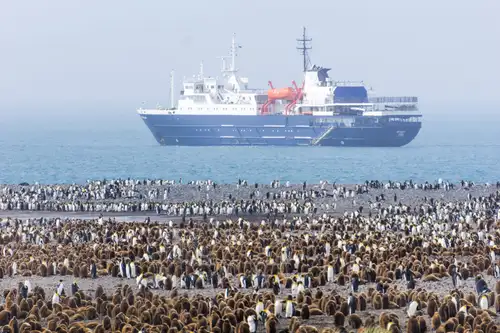
Three Antarctica Cruise Deals
For many travelers, Antarctica represents the ultimate polar destination. Its vast white landscapes offer an endless array of surreal vistas, much of its unique wildlife is found nowhere else on Earth, and its complete lack of an indigenous human population provides a sense of untouched seclusion that few other places can match.
Blog
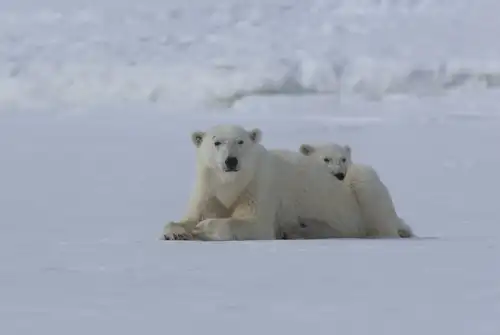
Polar Bears and Pack Ice: 22 Pics from North Spitsbergen
Last month, we explored one of the premier Arctic cruise destinations in our North Spitsbergen blog. That post not only detailed our itinerary in this breathtaking region but also highlighted some of the stunning locations where you might encounter polar bears, whales, walruses, seals, seabirds, and the mesmerizing ice formations of the far north.
Blog
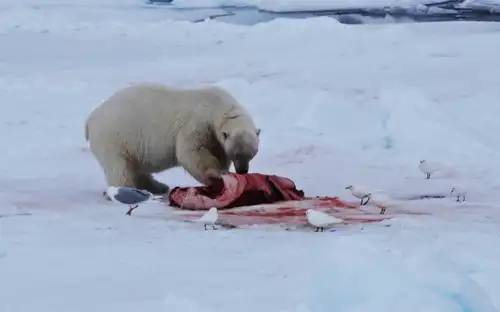
“The polar bear will still be there”
For several hours, we had been navigating the pack ice in search of polar bears. Despite numerous binoculars scanning the ice, no bears were visible, and only a few tracks were found. This suggested we might be in an area with fewer bears. Later that morning, we decided to head a few miles east, suspecting a higher bear population there.
Blog
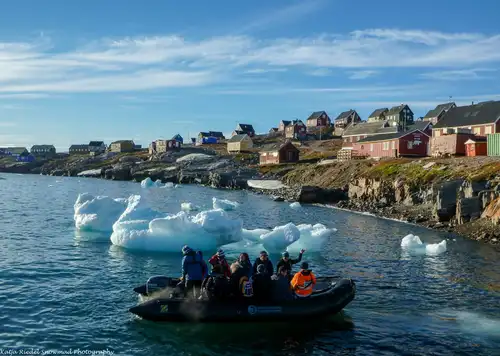
Scoresby Sund: the Greatest Greenland Adventure
In a land of expansive mountains, colossal glaciers, and majestic shorelines, few places are as expansive, colossal, or majestic as Scoresby Sund.
Blog
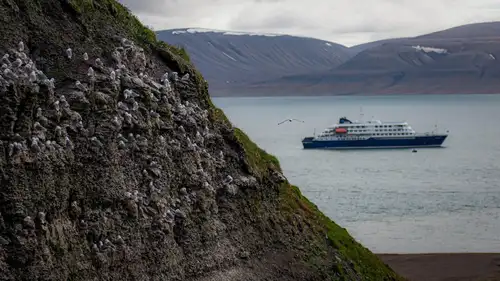
Circumnavigating Spitsbergen
Many of our expedition cruises focus on specific areas of the Arctic or Antarctica, delving deep into local wildlife and other natural highlights. However, some programs aim to provide a broader survey, visiting a variety of sites to offer guests a wider perspective.
Blog
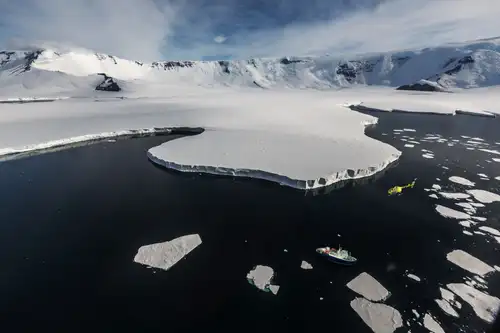
Taking a polar expedition cruise delivers no shortage of show-stopping highlights, but one of the most exhilarating is lifting off from the ship in a helicopter and taking flight over the incomparable Antarctic wilderness.
Embarking on a polar expedition cruise offers a plethora of breathtaking experiences, but one of the most thrilling is taking off from the ship in a helicopter and soaring over the stunning Antarctic wilderness.

Blog
The Ice-Jewelled Geology of Spitsbergen
The Svalbard archipelago is located in the Arctic Ocean, roughly 660 km (410 miles) north of Norway's northernmost point. This region is a haven for geologists, boasting a rich geological history that spans from the Mesozoic era (65-245 million years ago) through the Cambrian era (570 million years ago) and back to the Archean era, over 3.5 billion years ago.
Blog
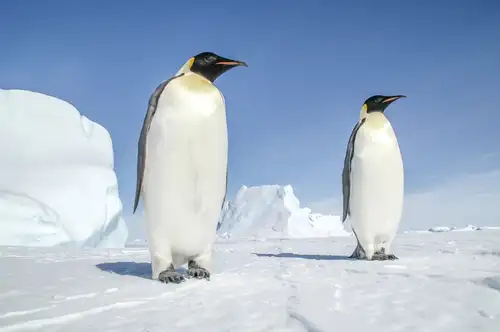
Antarctic Icon: 44 Facts About the Emperor Penguin
What polar bears are for the Arctic, emperor penguins are for Antarctica. These flightless aquatic birds are probably the most recognizable animals in the southern polar regions and certainly among the most popular wildlife attractions for our passengers.
Blog
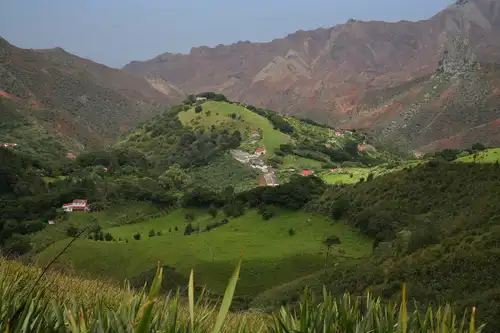
Five Reasons to Love St. Helena
Being one of the most remote islands on Earth gives St. Helena a unique allure. Named after a Roman empress and the mother of Constantine the Great, this island also holds the distinction of being Napoleon’s final place of exile, making it a fascinating topic of conversation.

Blog
The Best Arctic and Antarctic Trips for Families
Polar expedition cruises are often enjoyed by couples and an increasing number of solo travelers, but they can also be a fantastic adventure for families. If you have the budget to bring the whole family along, there are various polar trips that will make everyone equally excited about the ice.
Blog
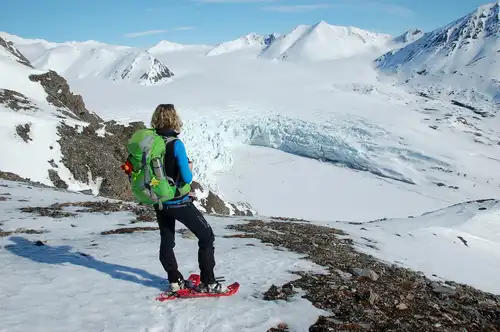
Arctic on Foot: Hiking and Snowshoeing the Far North
The focus of our voyages is always to get you off the ship and into the action as frequently as possible. While we travel from site to site on ice-strengthened vessels, our expeditions are crafted to provide you with the maximum firsthand experience of the polar regions and their unique wildlife.
Blog
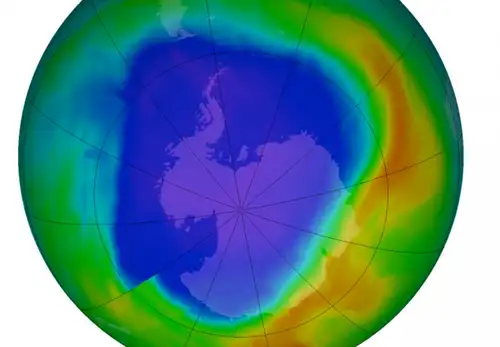
The ozone layer in Antarctica
An ozone molecule is composed of three oxygen atoms rather than the usual two. It exists in the atmosphere in trace amounts. Ozone molecules are created through the interaction of ultraviolet (UV) radiation from the sun with oxygen molecules: When an O2 molecule is split, the two free oxygen atoms bond with other O2 molecules to form O3 molecules.
Blog
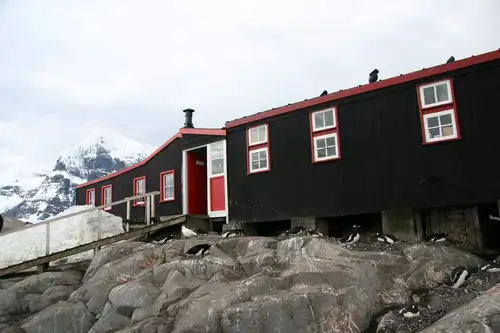
Port Lockroy: History, Post Office, and Resident Penguins
Sometimes it’s easy to get caught up in the stunning coastlines, fjords, and other natural wonders of Antarctica, overlooking the man-made attractions nestled in between.
Blog
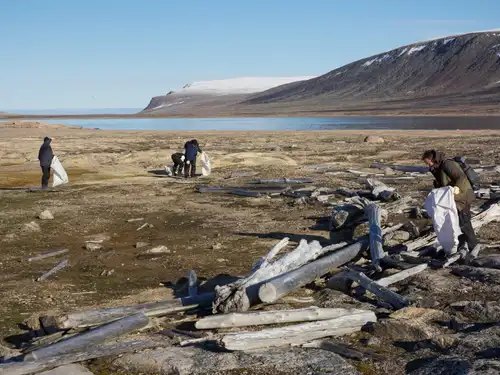
Keep It Green: Our Commitment to Sustainable Polar Travel
It doesn’t make much sense for expedition travel if every time we visit the polar regions we leave them worse than we found them. And that’s just considering things from a purely human perspective, which we don’t.
Blog
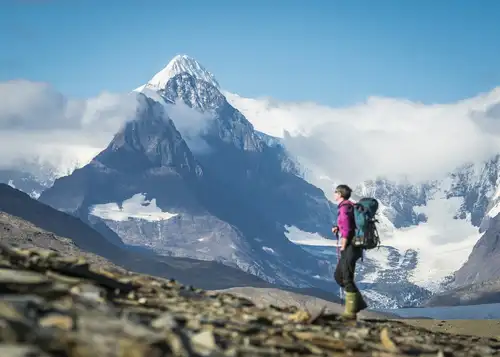
15 Fantastic Photos of Antarctica
It is often said that it's impossible to take a bad picture in Antarctica.
Blog
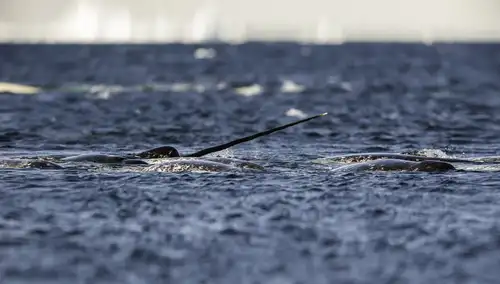
Narwhals: the Aquatic Unicorns of the Arctic
Though narwhals are among the rarest whale species encountered during our Arctic expeditions, a journey to the Arctic regions of Greenland and Svalbard always holds the potential for spotting these elusive creatures.
Blog
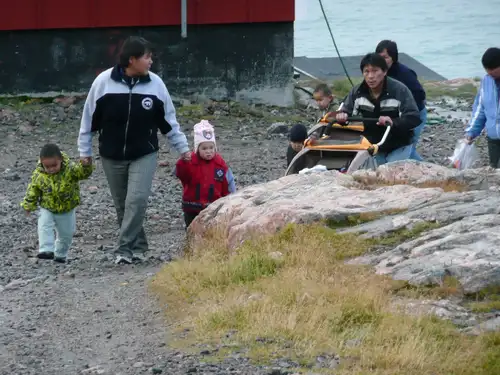
Greenlandic Inuit Beliefs
Greenland is the world’s largest island and with the northern tip around 740 kilometres from the North Pole it is the northernmost country on Earth. The island is around 2,670 kilometres long and is about 650 kilometres across at its widest point.