



Show More
Blog


Blog
The Research Stations of Antarctica and the sub-Antarctic
Numerous research stations operate throughout the Antarctic and sub-Antarctic, engaged in all manner of scientific inquiry. This article will cover the stations under the management of the British Antarctic Survey (BAS), which conducts year-round terrestrial and atmospheric research in some of the most compelling polar locations on Earth.
Blog
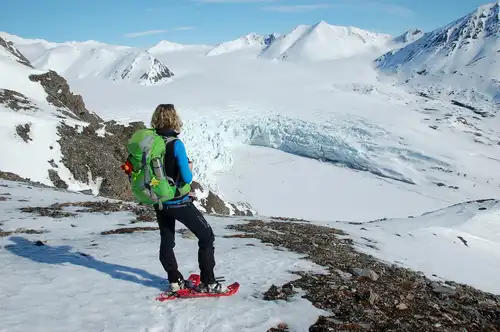
Arctic on Foot: Hiking and Snowshoeing the Far North
The focus of our voyages is always to get you off the ship and into the action as frequently as possible. While we travel from site to site on ice-strengthened vessels, our expeditions are crafted to provide you with the maximum firsthand experience of the polar regions and their unique wildlife.

Blog
Six Must-See Svalbard Sites
It's home to humanity's last-ditch supply of crop seeds, the world's northernmost settlement of over 1,000 people, and it is one of the best places on Earth to spot a polar bear.
Blog
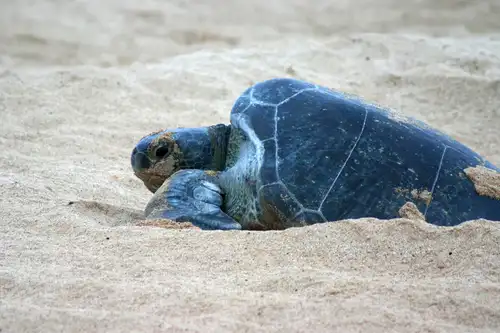
Going Green: Ascension Island Sea Turtles
Gold beaches, green mountains - and greener turtles.
Blog
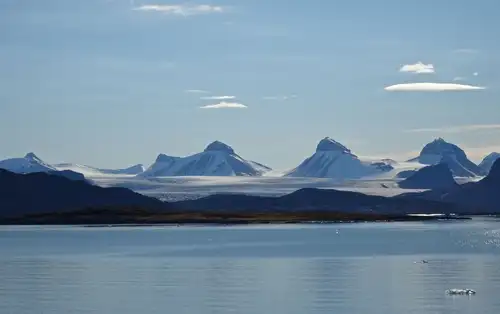
The Arctic Borderland of Kongsfjorden, Svalbard
Kongsfjorden is a glacial fjord in Svalbard that hosts a diverse array of flora and fauna.
Blog
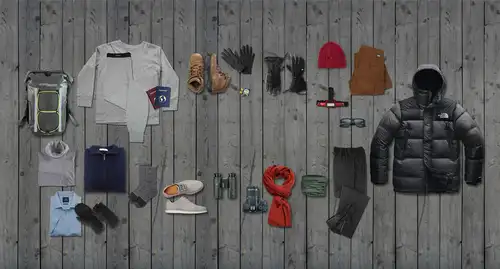
What to Pack for Your Expedition Cruise to the Arctic or Antarctica
It’s easy to get confused about what to pack for a polar cruise. Some items are provided and some are not, and it’s not always clear which is which. This article will make your polar pack list painstakingly clear. Promise.
Blog
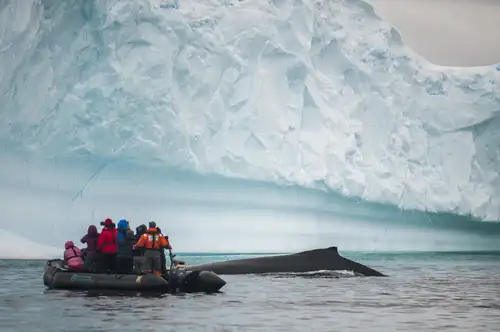
A Day of Whale Watching in Antarctica
This morning we awoke early to enjoy the first light in Wilhelmina Bay, with the snow and cloud blanketing the surrounding mountains. As dawn broke, we could see the blows of humpback whales scattered throughout the bay. Some of the whales were closer to the ship and we spotted their small dorsal fins and occasionally their white patterned tails. It was a terrific start to our first full day in Antarctica.
Blog
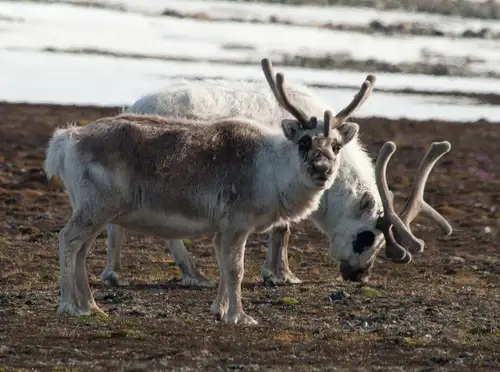
Amphibian, reptiles and herbivore mammals in the Arctic
Arctic ecosystems are relatively young in geological terms, having primarily developed over the past three million years. Generally, species richness is lower in the Arctic compared to more southerly regions, aligning with scientific observations that biodiversity decreases from the Equator to the poles.
Blog
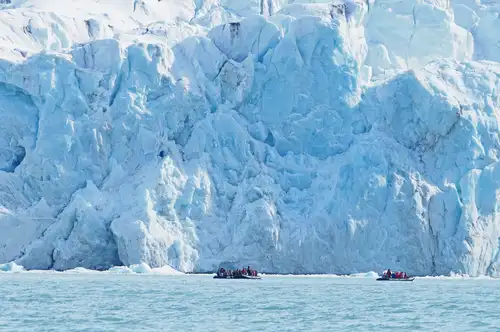
Get to Know Your Ice
Ice plays a crucial role in everything from cooling your drink to regulating the planet's temperature. Let's explore the various forms of ice you might encounter during an Arctic or Antarctic adventure.
Blog
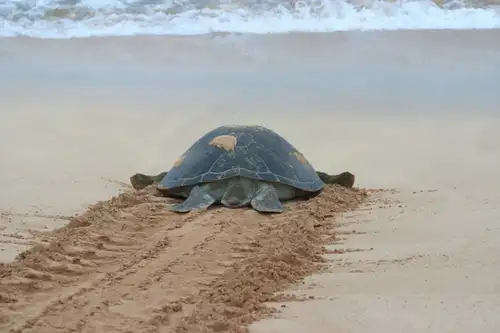
The Overlooked Treasures of Ascension Island
If you know anything about Ascension Island, which is unlikely, it probably has to do with the green turtle breeding population that exists there.
Blog
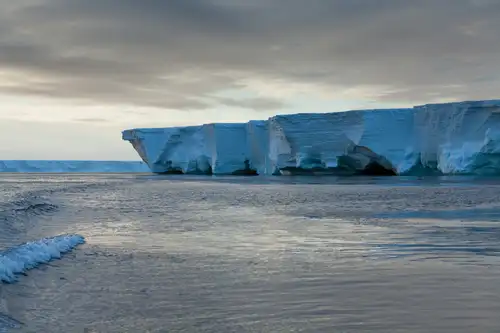
Science of the Ross Ice Shelf
Antarctica’s Ross Ice Shelf is vast, spanning 487,000 sq. km – comparable to the size of France – with a thickness that varies from a few hundred meters near the sea to over 1,200 meters away from the floating edge. The edge along the Ross Sea forms a towering ice wall, rising up to 50 meters above the water, with most of the ice submerged below the waterline.
Blog
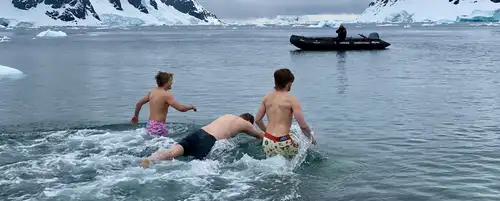
Taking the Polar Plunge
There are some human activities that for many people simply defy understanding: We juggle chainsaws, we breathe fire, we fling ourselves out of perfectly good airplanes.
Blog
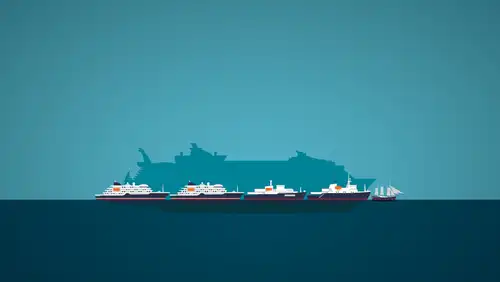
The Impact of Small vs. Large Cruise Ships
The generalization that larger ships impact the environment more than smaller ships seems like such a no-brainer that if someone said it to you, you’d be easily forgiven for thinking you were being tricked.
Blog
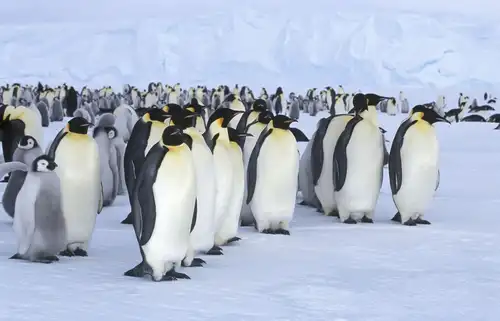
Imperial Antarctica: the Snow Hill Emperor Penguins
Recently, a rare achievement was made by visiting Antarctica’s northernmost emperor penguin colony on Snow Hill Island. Typically surrounded by impassable pack ice, Snow Hill is a notoriously difficult destination in the Weddell Sea cruise itinerary, only accessible using helicopters carried especially for this purpose.
Blog
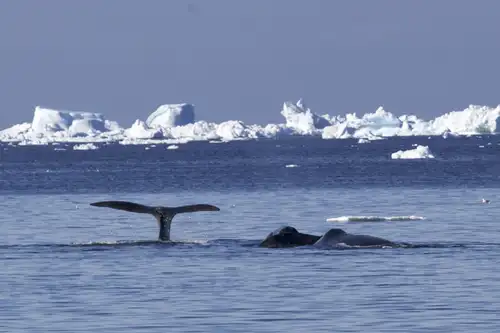
The bowhead whale, whaling about the Arctic
The bowhead whale typically resides near pack ice, often in shallow waters. These whales are commonly found north of Europe, between Canada and Greenland, in the Hudson Bay area, the Okhotsk Sea, and the Bering, Chukchi, and Beaufort seas. In these regions, they filter food through their large baleen plates. Bowheads are known to open their large mouths and graze along the surface, in the water column, or on the sea floor.
Blog
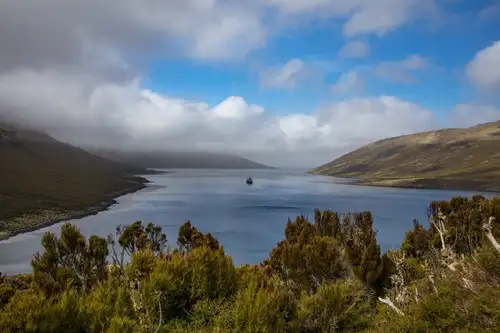
Visiting the Nearly Unknown: New Zealand’s Campbell Island
New Zealand is a renowned destination globally, and for good reason: It’s absolutely stunning. Almost every corner is filled with unparalleled beauty. But did you know that New Zealand includes several sub-Antarctic Islands that are almost completely unknown?
Blog
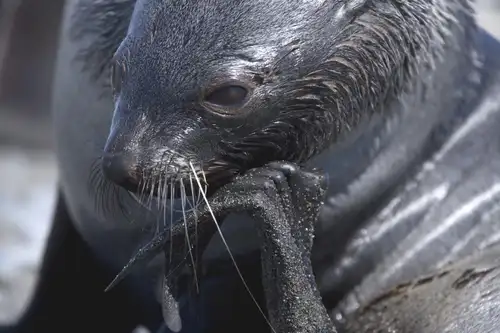
Coming Back from the Brink: The Fur Seals of Antarctica
Once hunted to the brink of extinction, the Antarctic fur seal is now one of the most populous and charismatic species of seal you’re likely to encounter during your Antarctica trips. Unlike other members of its large family, the fur seal has external ears, or pinnae, a short snout, and a thick coat of dark brown fur. Male seals tend to be larger than females, with weights ranging from 91 kg (200 lbs.) to 215 kg (474 lbs.).
Blog
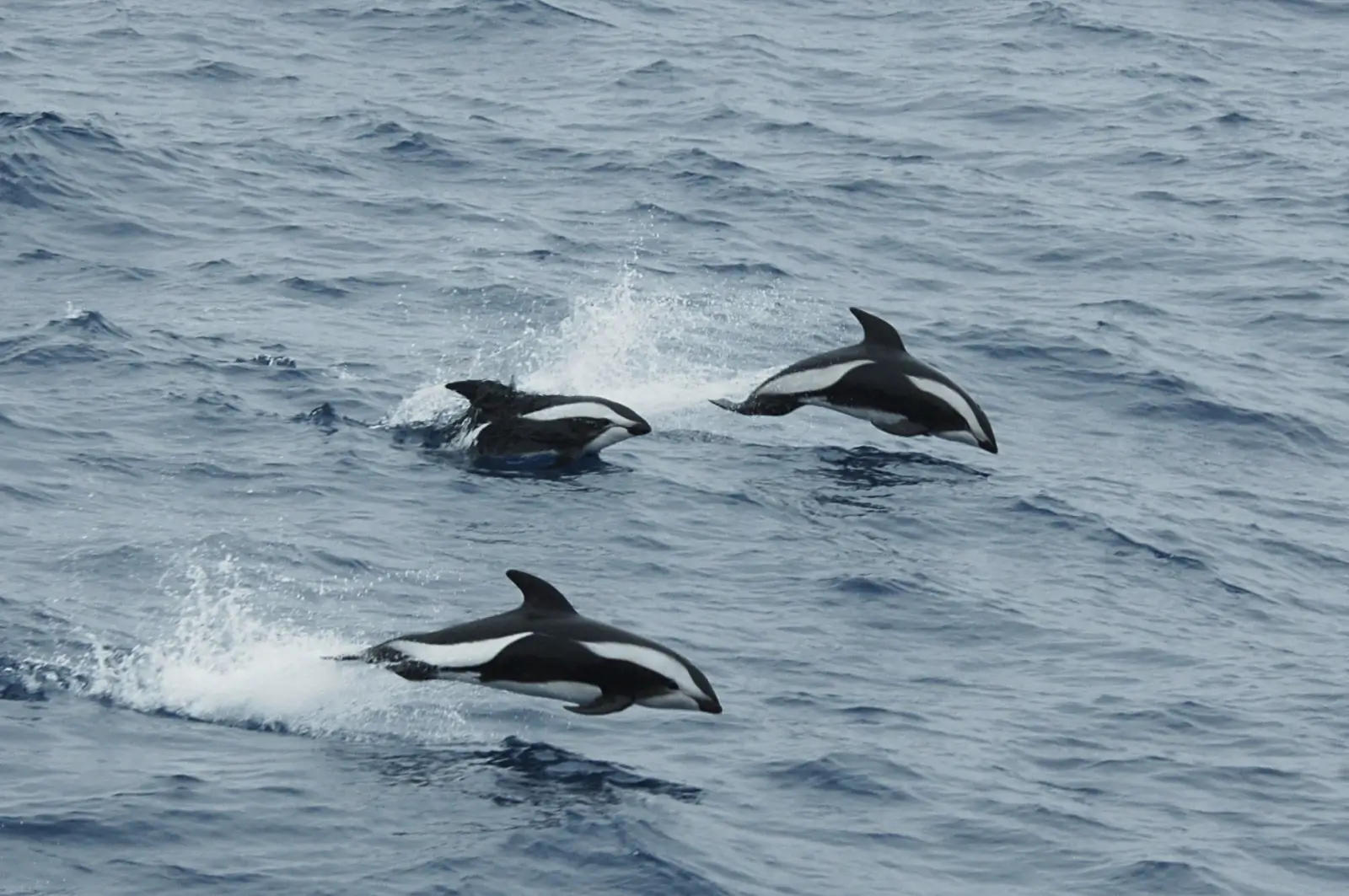
Antarctica’s Hourglass Dolphin
Though hourglass dolphins are especially rare, they’re actually not a threatened or endangered species.
Blog
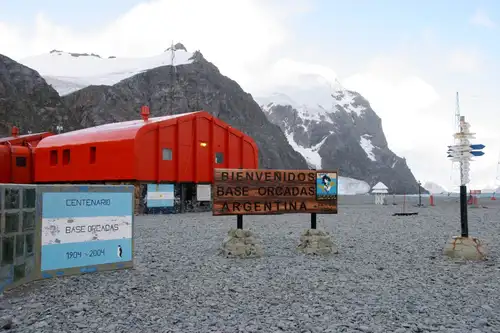
A Look Into the International Research Stations of Antarctica
In 1902, William S. Bruce, along with a team of naturalists, explorers, and sailors, embarked on the first Scottish expedition to Antarctica’s South Pole aboard the Scotia. The Scottish National Antarctic Expedition (SNAE) aimed to establish the continent's first meteorological station and explore its largely undocumented biological, topographic, and meteorological features.
Blog
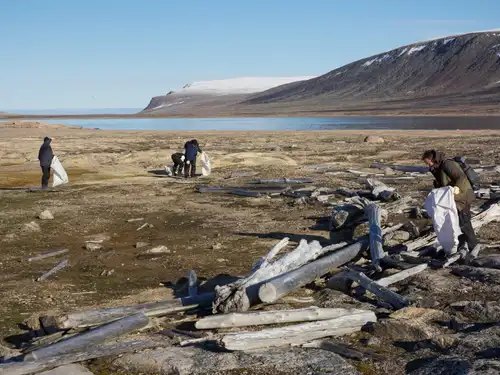
Keep It Green: Our Commitment to Sustainable Polar Travel
It doesn’t make much sense for expedition travel if every time we visit the polar regions we leave them worse than we found them. And that’s just considering things from a purely human perspective, which we don’t.