
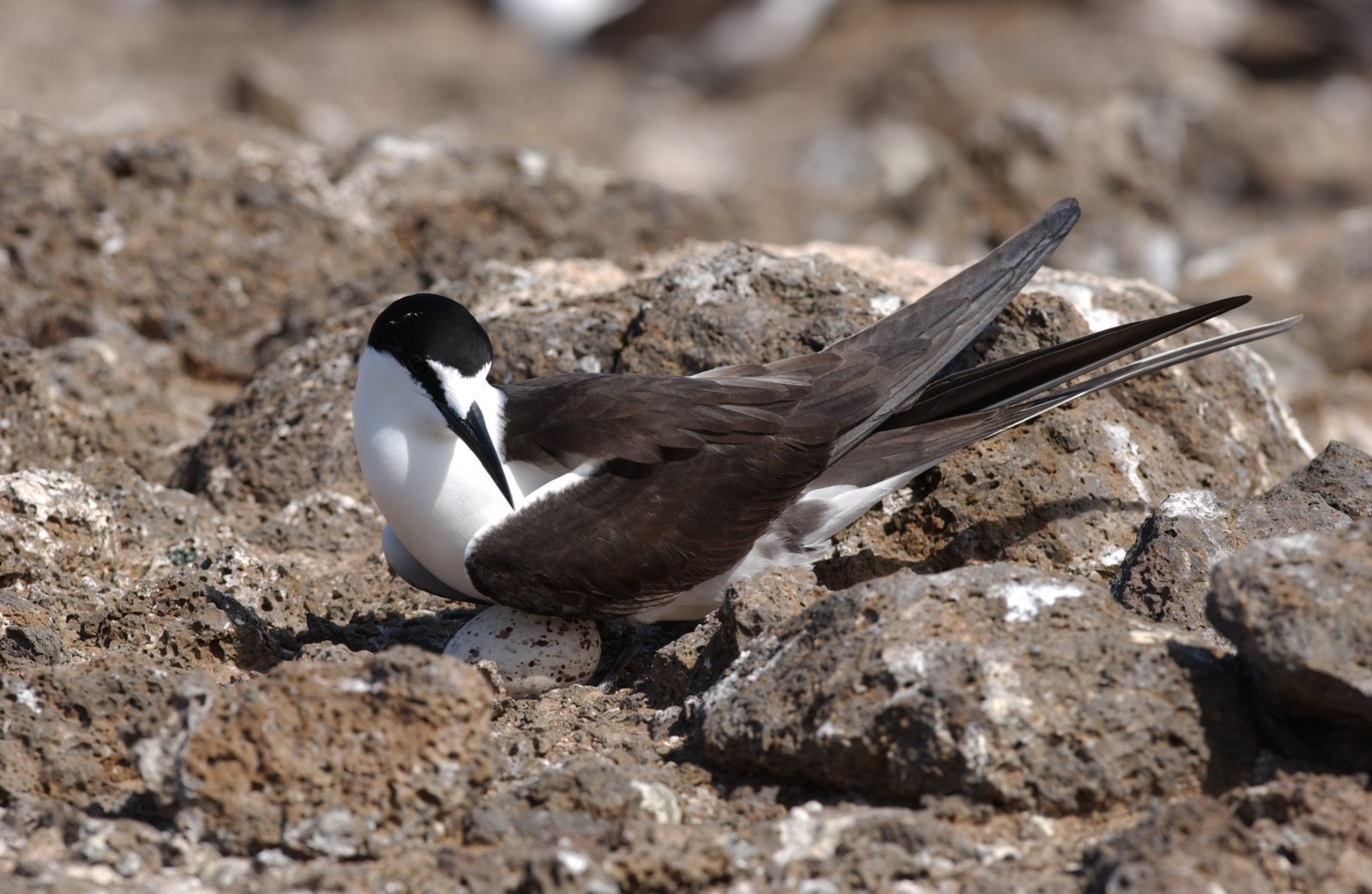
Name: Sooty Tern, Wideawake Tern, Ewa Ewa, Common Tern, Kaveka, Egg-bird, Whale Bird (Onychoprion fuscatus)
Length: 35 centimetres.
Weight: 150 to 240 grams.
Location: Tropical oceans worldwide.
Conservation status: Least Concern.
Diet: Fish, small squid.
Appearance: Black back and head, white undersides. Forked tail. Black tail and legs. White patch over bill.
How do Sooty Terns feed?
Sooty Terns hunt just below the water's surface, often flocking where larger predators drive prey fish upward.
Are Sooty Terns social?
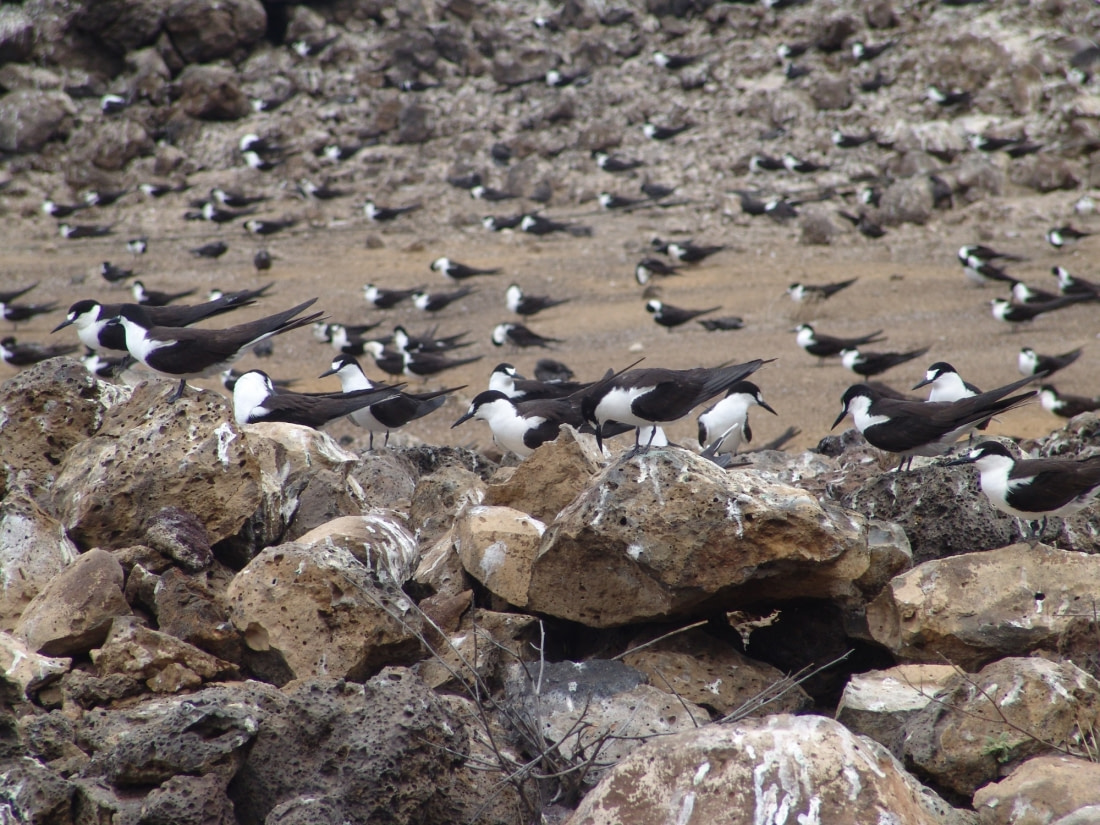
Sooty Terns are social and form colonies of over 1 million during breeding season.
How fast do Sooty Terns fly?
Sooty Terns can fly up to 40 km per hour.
What are Sooty Tern birthing rituals like?
Sexual maturity is reached at 6 years. Breeding season varies by location. They nest on coral or rock-covered islands, building nests in ground depressions. Courtship involves strutting and bowing. Typically, 1 to 3 eggs are laid, incubated by both parents for about a month. Parents shade eggs in hot weather. Chicks are fed regurgitated fish for 2 months before fledging. Juveniles stay around the colony for 2-3 weeks before heading to sea.

How long do Sooty Terns live?
Sooty Terns live about 30 years in the wild.
How many Sooty Terns are there today?
The global population is estimated at over 21,000,000.
Do Sooty Terns have any natural predators?
Nesting sites are vulnerable to rats, cats, and invasive ants like Anoplolepis longipes.
7 Stupendous Sooty Tern Facts
1. "Wideawake Tern" refers to their constant calls.
2. The Hawaiian name "Ewa Ewa" means "cacophony."
3. They can stay at sea for up to 10 years, only coming to land for breeding.
4. Sometimes they are blown onto land by weather.
5. They take 1-2 second naps while flying as they can't float or land at sea.
6. Their feathers are not waterproof, so they stay airborne to avoid becoming waterlogged.
7. Their colonies are so noisy that OSHA standards limit exposure to the noise to half an hour.